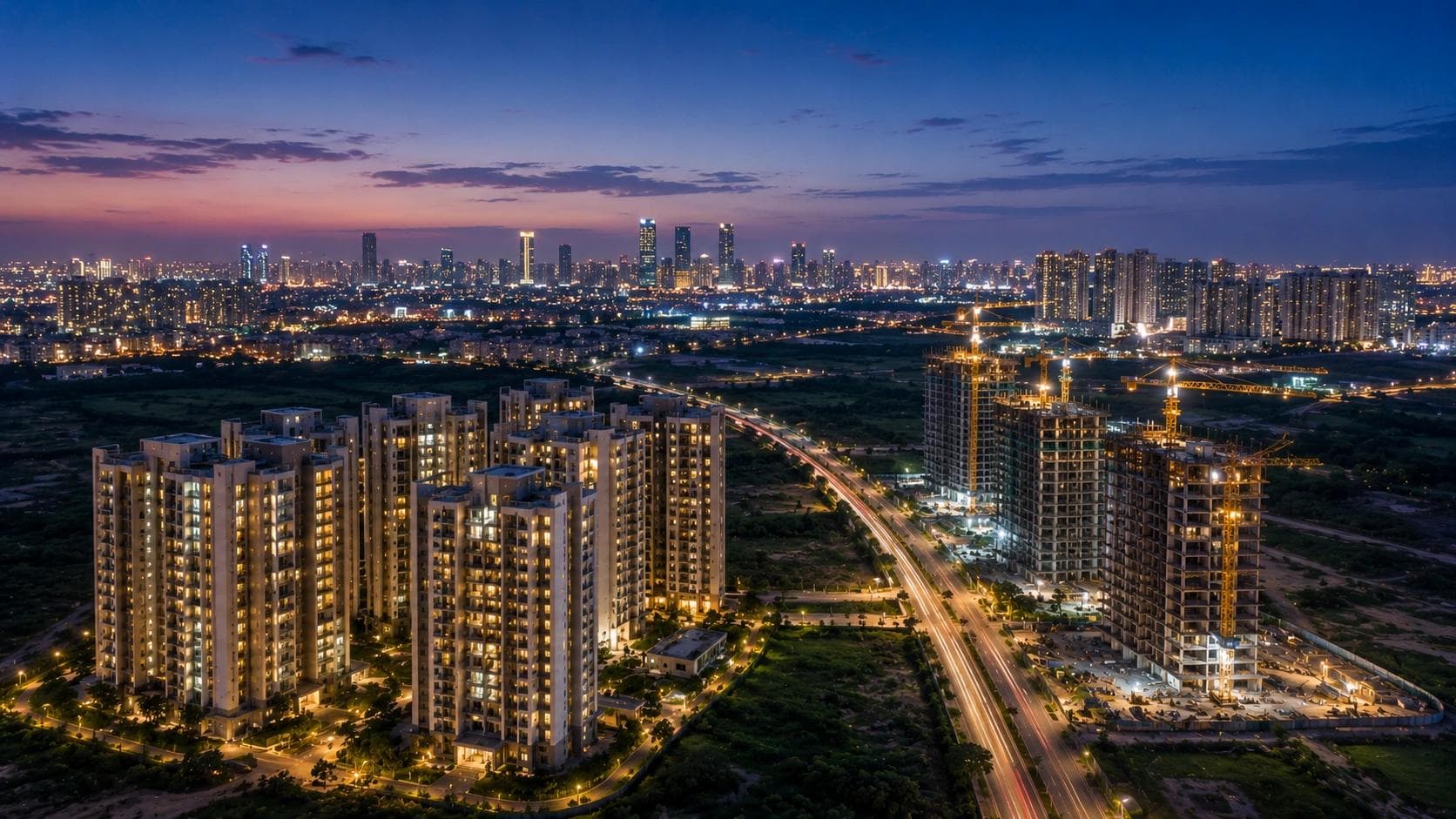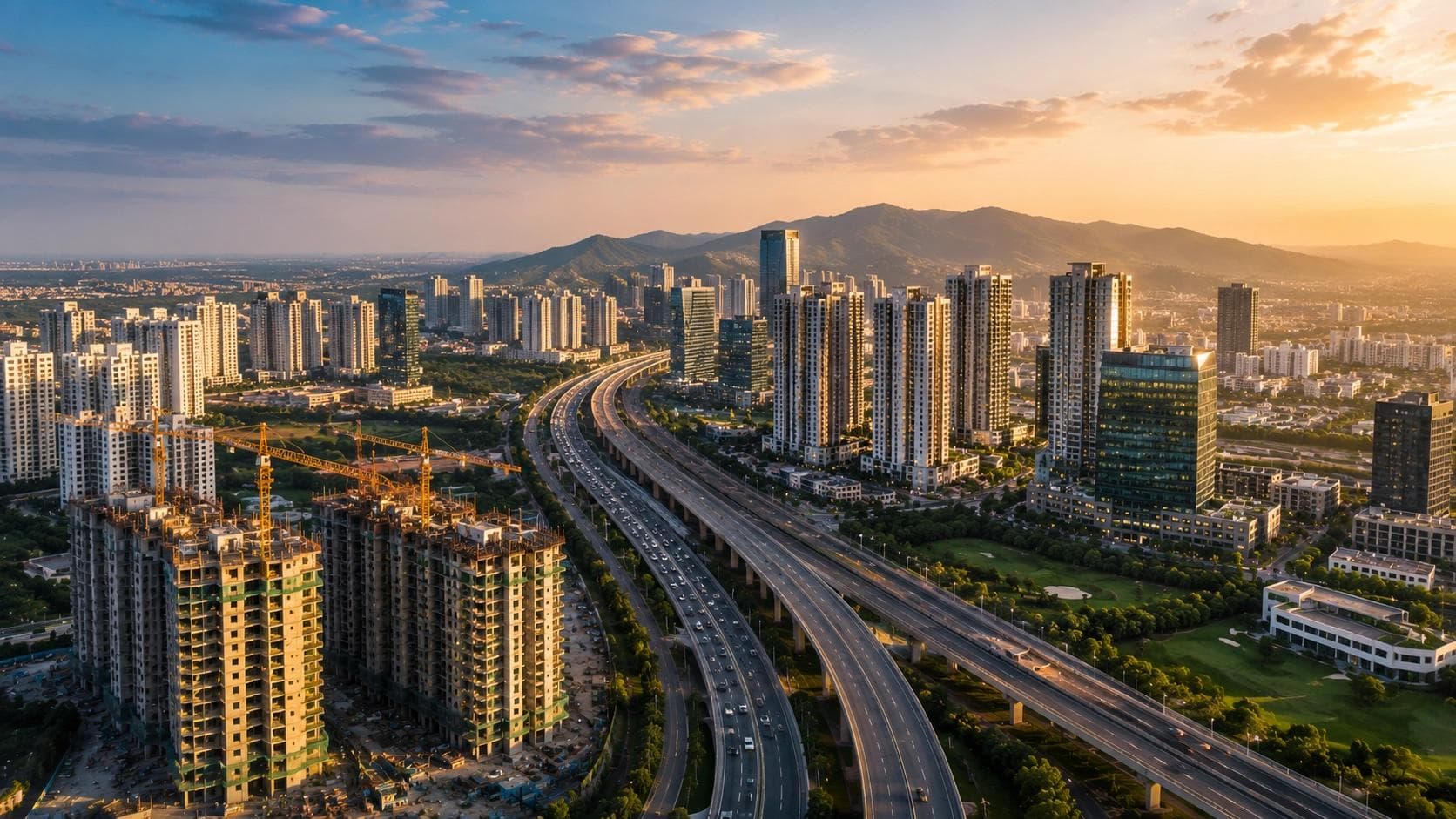
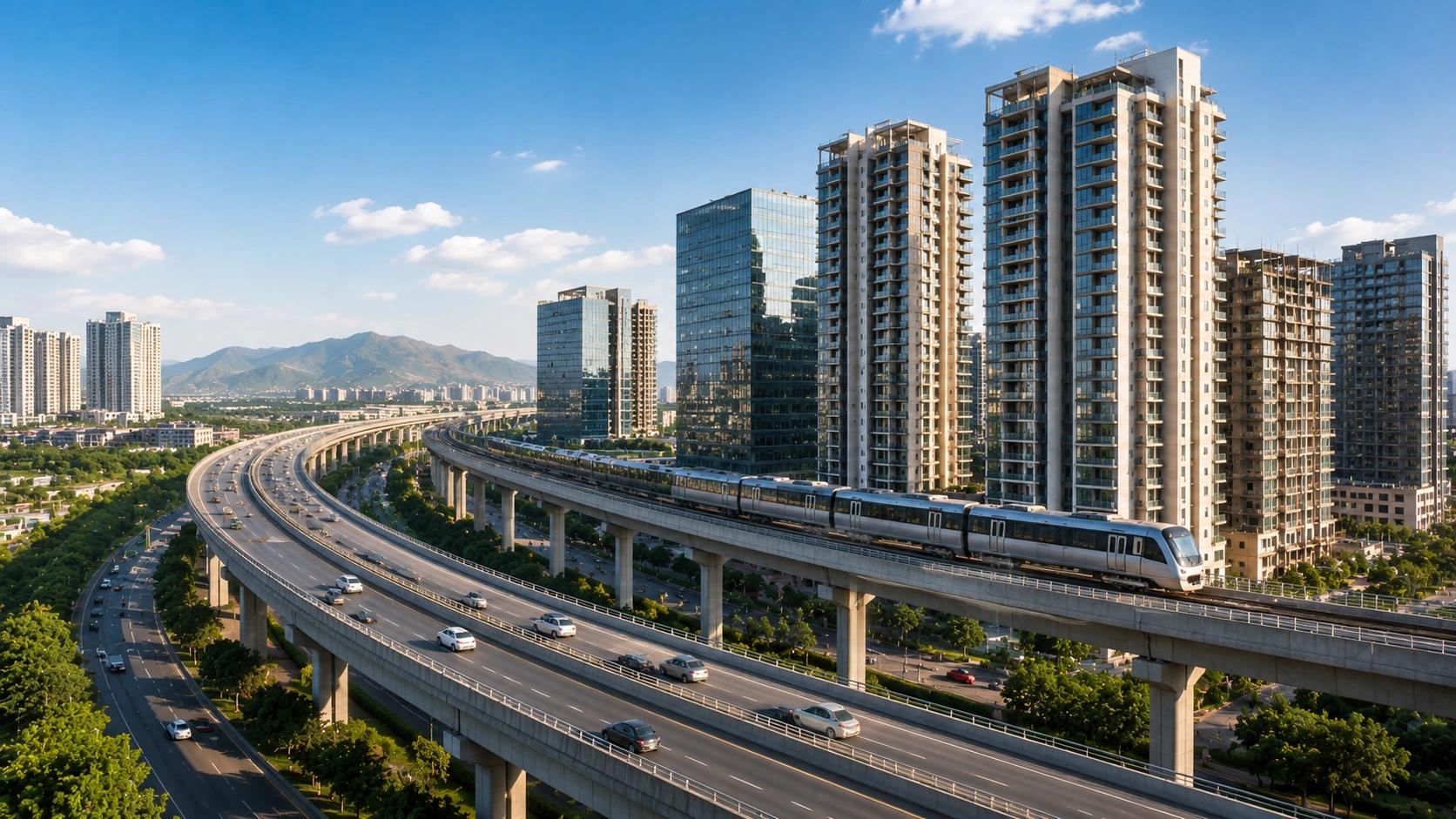
Ask five real estate investors what drives property appreciation in Gurgaon, and you will get two distinct camps.
The first camp says location is everything. Golf Course Road was premium before the metro arrived. South Delhi has held its value for decades without dramatic infrastructure additions. Address prestige, they argue, is the real price driver, and no amount of flyovers changes that.
The second camp points to Dwarka Expressway. It was a dusty, unfinished stretch of road in 2015. Today it commands Rs 21,000 to Rs 24,000 per sq ft. What changed? One thing: infrastructure arrived.
Both camps have evidence. Neither is entirely right. And understanding where the truth actually sits, and how to apply it as an investor, is what separates great real estate decisions from mediocre ones.
What the Data Says: Infrastructure Wins in the Short-to-Medium Term
When you look at the last decade of Gurgaon price data, one pattern is impossible to ignore: the biggest and fastest appreciation has consistently followed infrastructure delivery.
Experts forecast 10 to 15% annual property appreciation in Gurgaon's premium sectors, driven by infrastructure projects like Dwarka Expressway completion, Global City development, and expanding metro connectivity. Sectors 84 to 88 on Dwarka Expressway, Golf Course Extension Road, and the upcoming Global City corridor are projected to see the highest appreciation in Gurgaon over the next five years.
Notice what is driving those projections. Not location heritage. Infrastructure delivery.
Projects like Dwarka Expressway and metro expansions have significantly improved connectivity. Areas near these developments have witnessed property appreciation of up to 20%. Infrastructure development is a key factor in the appreciation of real estate.
Dwarka Expressway rose from Rs 6,300 per sq ft in 2015 to Rs 21,700 to Rs 24,000 in 2026. That is a 280% increase driven almost entirely by one road becoming functional. SPR delivered 125% appreciation in three years as infrastructure improvements converged. Dharuhera jumped 250% in six years as RRTS anticipation built.
The mechanism is consistent: infrastructure reduces commute time, expands the employment catchment, attracts developers, creates demand, and pushes prices up. Every time.
What Location Actually Provides: The Long-Term Price Floor
Infrastructure explains price surges. But location, specifically an established, premium address, explains something different and equally important: price stability and floor protection.
Golf Course Road has not delivered 125% in three years. But it has also never seen a significant correction. Through economic slowdowns, interest rate cycles, and post-pandemic disruption, Golf Course Road prices held. Why? Because the address has intrinsic demand from a permanent class of buyers, HNIs, senior professionals, NRIs, who want that specific location regardless of what infrastructure is or is not arriving.
Metro expansion in Gurgaon is no longer just a supporting factor. It is a core pricing driver. But market price certainty, not announcements. Verified execution matters more than future plans. And localities such as Sector 29, 40, 43, and the MG Road belt that benefited early established a clear pattern: metro access protects downside risk while location prestige underpins the price floor.
This is the distinction that matters for investors: infrastructure creates appreciation events. Location creates price floors.
The Hierarchy of What Actually Moves Gurgaon Property Prices
Based on what has actually happened across Gurgaon's corridors over the last decade, here is an honest ranking of what drives appreciation, from most to least impactful:
| Driver | Impact Level | Timeline | Best Example |
|---|---|---|---|
| Major road / expressway operationalisation | Very High | 2 to 5 years | Dwarka Expressway: 280% in 10 years |
| Metro station proximity (within 800m) | High | 3 to 7 years | HUDA City Centre belt: consistent premium |
| Premium developer launch in corridor | High | 1 to 3 years | DLF Privana on SPR: immediate 30%+ jump |
| Address / location prestige | Medium-High | Stable, long-term | Golf Course Road: permanent price floor |
| Social infrastructure maturity | Medium | 5 to 10 years | Sushant Lok: decades of stable demand |
| RRTS / regional connectivity | Medium-High | 5 to 10 years | Dharuhera: 250% in anticipation |
| GCC / corporate expansion nearby | Medium | 3 to 7 years | Cyber City belt: sustained MNC demand |
The Compounding Effect: When Infrastructure and Location Overlap
The most powerful price appreciation in Gurgaon has always happened when infrastructure and location overlap, when a new road, metro line, or expressway arrives in or adjacent to an area that already has location credentials.
From premium corridors like Golf Course Road to emerging zones like GCER and Dwarka Expressway, metro connectivity directly influences who buys, who rents, and how fast prices move. Properties within 500 to 800 metres of metro stations tend to benefit most.
Golf Course Extension Road is the clearest current example. It has the Golf Course Road address heritage as a neighbour and direct brand association. It also has active infrastructure delivery, the Namo Bharat RRTS corridor running through it, metro expansion, and road widening underway. The result: prices went from Rs 8,800 per sq ft in 2020 to Rs 37,899 in 2025. That is the compounding effect of infrastructure arriving in a location-credible area.
In Gurgaon, real estate value is no longer defined only by luxury interiors or big brand names. In 2026, connectivity is the real currency. Homes located close to metro corridors and expressways are consistently outperforming others in demand, rental traction, and long-term appreciation.
The Investor Framework: How to Apply This Practically
Understanding what drives appreciation is only useful if it changes how you invest. Here is the practical framework that follows from the data.
If your goal is maximum appreciation in 3 to 7 years, prioritise infrastructure timing over location heritage. Find corridors where major infrastructure is under active construction, confirmed, funded, and visibly progressing, and buy before completion. Dwarka Expressway in 2018, SPR in 2021, and the Namo Bharat RRTS corridor today are all examples of this playbook at different stages.
If your goal is wealth preservation and income stability, prioritise location over infrastructure timing. Established address corridors like Golf Course Road, parts of Sushant Lok, and DLF Phase 1 to 5 will not give you 80 to 110% in five years. But they will not give you volatility either, and they will hold their value through market cycles when emerging corridors soften.
If your goal is both, look for the overlap zones: corridors that have genuine location credentials and active infrastructure delivery arriving simultaneously. In Gurgaon's current market, Golf Course Extension Road and SPR both sit in this category.
Industry analysts advise buying in Gurgaon's established or rapidly developing sectors now, as prices in prime locations are unlikely to correct and waiting typically results in paying a higher entry price.
The One Mistake That Kills Investor Returns
The most common mistake Gurgaon investors make is assuming that infrastructure announcements are the same as infrastructure delivery.
A critical mistake many buyers make is assuming proximity to planned infrastructure automatically guarantees high returns. Properties near metro stations but lacking basic infrastructure often underperform despite connectivity. Smart investors evaluate the ecosystem, not just the line on a map.
There are sectors in Gurgaon where infrastructure was announced a decade ago and still has not arrived. Buyers who entered based on the announcement have been waiting for appreciation that never came. Infrastructure-backed investing only works when the infrastructure is confirmed, funded, under active construction, and has a credible delivery timeline.
The lesson: location gives you a price floor you can rely on. Infrastructure gives you appreciation, but only when it is real, not when it is promised.