The Decision That Comes Up in Almost Every Gurgaon Property Search
At some point in nearly every Gurgaon property search, buyers land on the same fork in the road. Do you buy a builder floor - low-rise, private, land-backed - or a high-rise apartment in a gated society with amenities and a managed lifestyle?
A real comparison that comes up often: a 3 BHK flat in a well-known high-rise society on Golf Course Extension Road priced at ₹2.1 crore, versus a luxury floor in Sector 63A at ₹2 crore. Same budget, almost the same location, but a completely different home-buying experience.
This is precisely the dilemma facing thousands of Gurgaon buyers in 2026. And the honest answer is that there is no universal winner - but there is a clear pattern in what different buyer types are actually choosing, and why.
First, What Exactly Is the Difference?
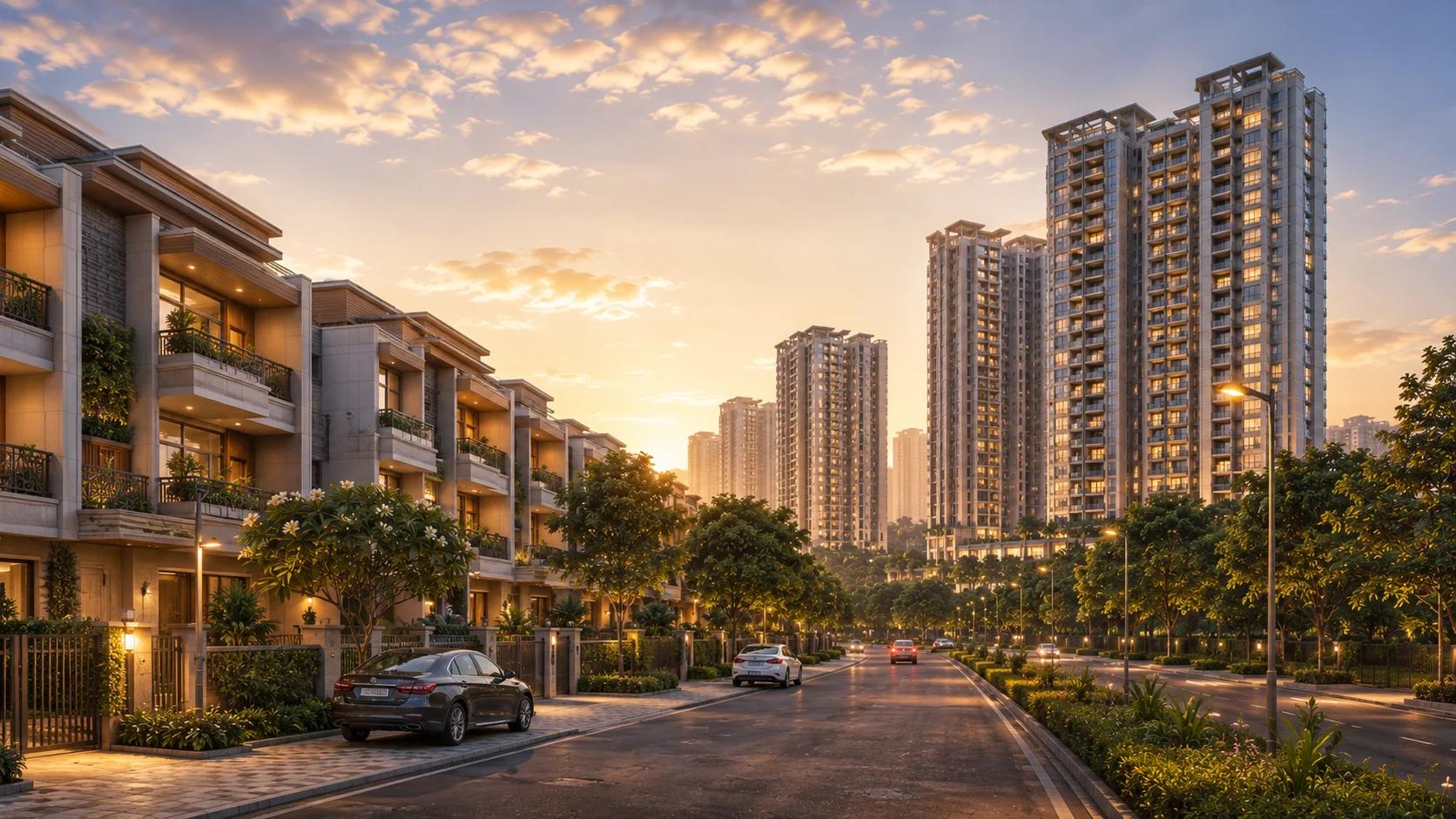
A builder floor is a residential unit built on a privately-owned plot, inside a low-rise building, typically ground plus 2 to ground plus 4 floors. Each floor is sold separately. If you buy the second floor, you own the entire second floor, not just a unit on it.
Builder floors in Gurgaon offer better privacy, spacious layouts, and lower density living, but they may have fewer amenities and less organised maintenance compared to high-rise societies.
A high-rise apartment, by contrast, is one unit within a large multi-storey building managed by a developer or a Resident Welfare Association, typically offering shared amenities - clubhouse, pool, gym, gardens - and 24/7 managed security.
What Buyers Are Actually Choosing in 2026: The Trend Data
According to 99acres market data for Gurgaon, demand for independent floors has risen sharply in 2025–26, particularly in sectors along Dwarka Expressway and Golf Course Extension Road - driven by post-pandemic preference for larger, lower-density homes.
This is the single most important trend shift to understand. Builder floors, which were once seen as a budget-conscious or older-generation choice, are now experiencing renewed demand from a different buyer profile entirely - people who have lived through the pandemic's space constraints and are actively seeking lower-density, more private living.
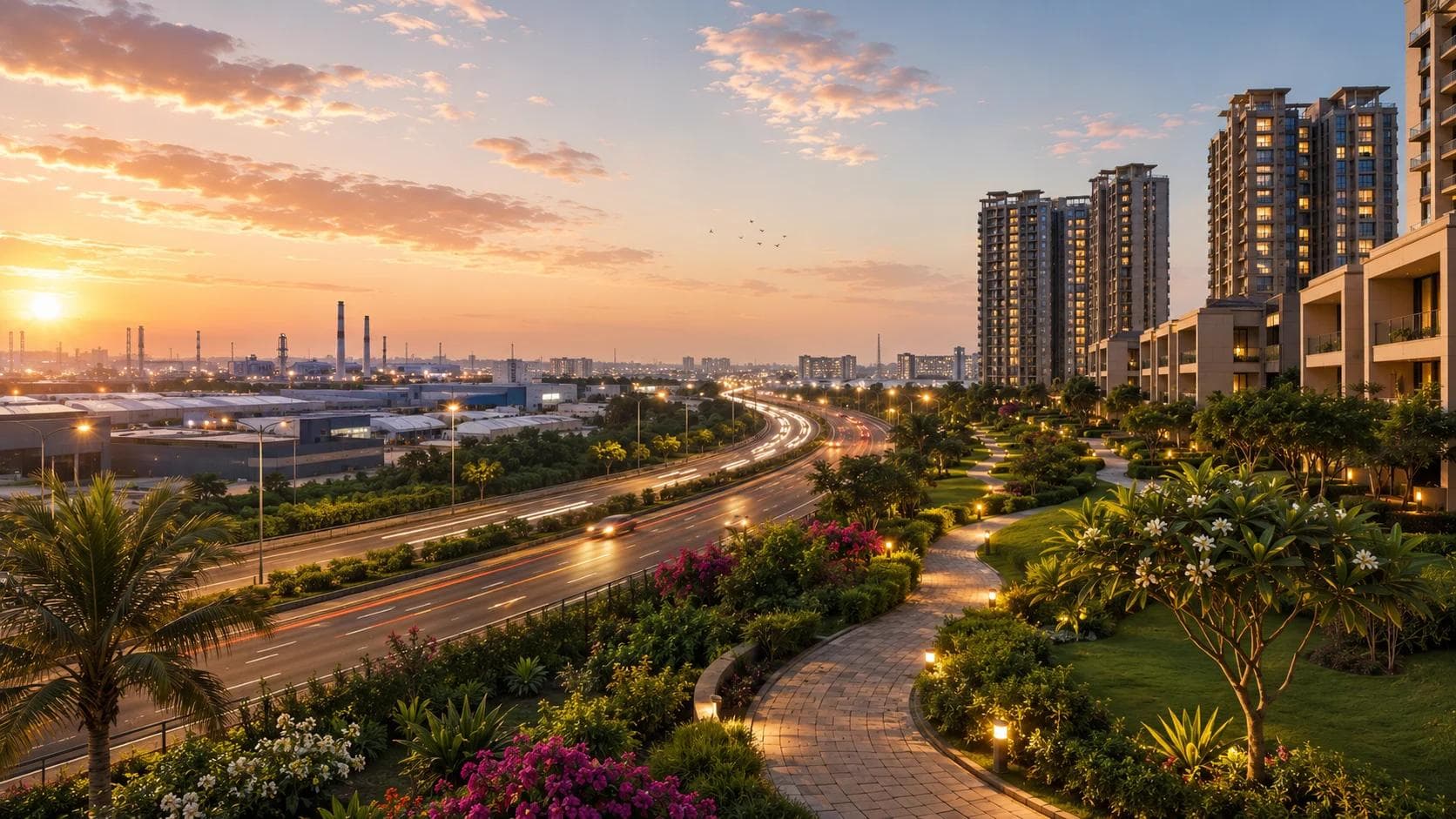
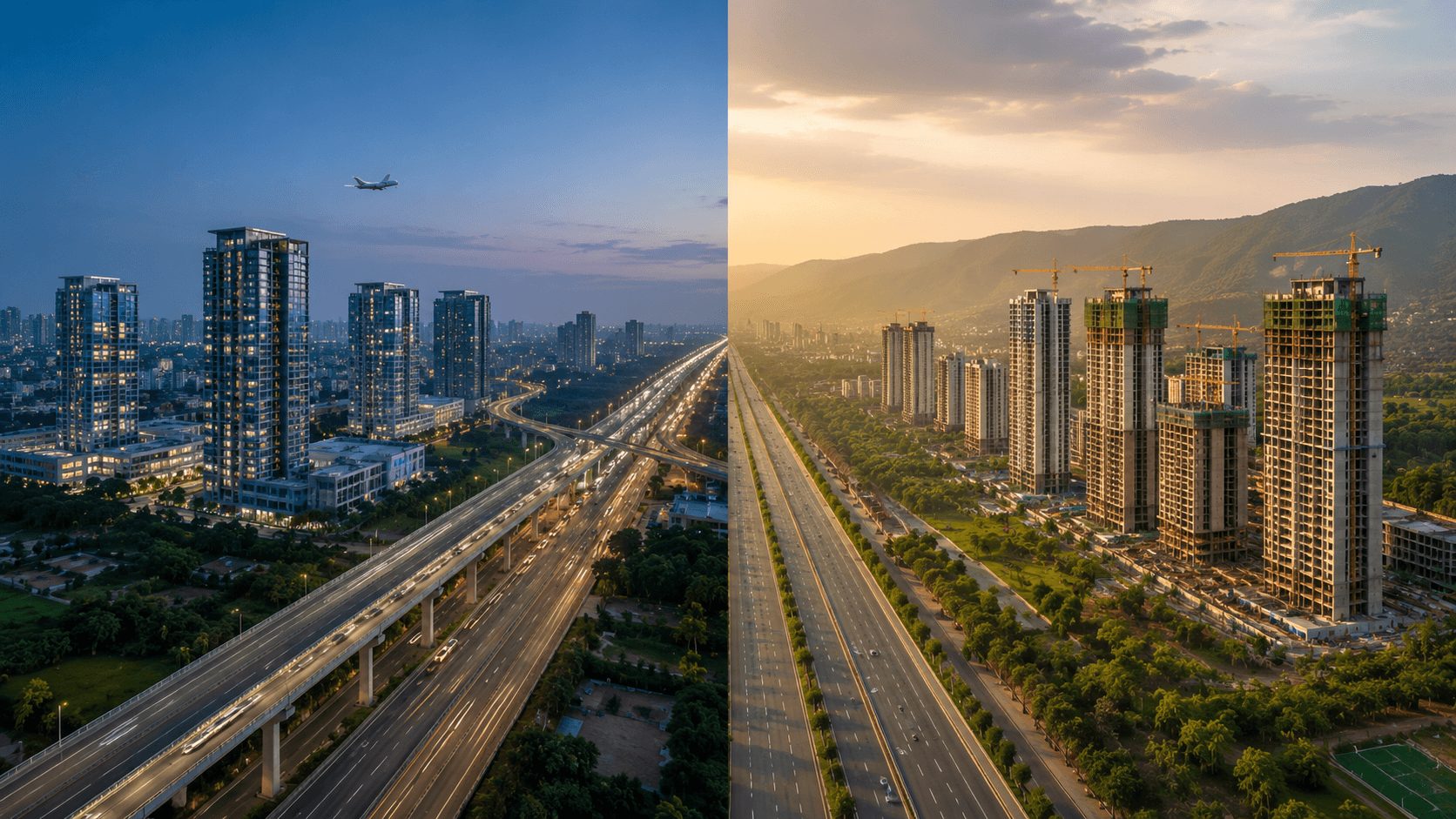
On one side, vertical high-rise clusters dominate corridors like Golf Course Extension Road and Dwarka Expressway, driven by institutional developers, corporate demand, and infrastructure-led growth. On the other hand, low-rise builder floors and DDJAY plots continue to expand across South and New Gurgaon, offering a more land-linked ownership structure with lower density living. For buyers in 2026, this is no longer a lifestyle debate. It is a strategic decision that directly impacts long-term appreciation, rental performance, and exit flexibility.
Both formats are growing. They are simply growing for different reasons, in different sectors, for different buyer segments.
Price Comparison: What Each Format Costs in 2026
Builder floors in DLF Phases and Sushant Lok range from ₹3 crore to ₹15 crore. Luxury apartments on Golf Course Road range from ₹6 crore to ₹30 crore. Mid-range apartments on Sohna Road and Dwarka Expressway range from ₹1 crore to ₹4 crore.
| Format | Typical Price Range | Best Sectors | Configuration |
|---|---|---|---|
| Builder Floor (Standard) | ₹1.5–₹4 Cr | New Gurgaon, Sector 57, South City | 3–4 BHK |
| Builder Floor (Premium) | ₹3–₹15 Cr | DLF Phase 1–5, Sushant Lok, GCER | 3–4 BHK |
| High-Rise (Mid-Range) | ₹1–₹4 Cr | Sohna Road, Dwarka Expressway | 2–3 BHK |
| High-Rise (Luxury) | ₹6–₹30 Cr | Golf Course Road, SPR | 3–5 BHK |
High-rise units are often more affordable per square foot initially, but include additional charges like PLC, floor rise, and maintenance. Builder floors are slightly more expensive, but you own a portion of the land, which appreciates over time and adds value to the property.
Rental Yield: Where High-Rise Apartments Currently Win
If your priority is rental income, the data points clearly in one direction.
Apartments in well-connected Gurgaon sectors consistently deliver 3.5–4.5% annual yield. Builder floors yield 2.5–3.5%, though premium floors near corporate hubs can push higher. For rental income, apartments have a clear short-term edge. Corporate tenants, MNC employees, and expats strongly prefer gated society living.
High-rise apartments offer better rental yields due to amenities and demand from working professionals. Builder floors have lower tenant demand but higher resale value due to land ownership and scarcity.
The reason is straightforward: corporate tenants - particularly GCC employees and expats relocating with company housing allowances - gravitate toward managed, amenity-rich, secure environments. A gated high-rise society checks every box on a corporate housing checklist in a way that a standalone builder floor typically does not.
Capital Appreciation: Where Land Ownership Changes the Equation
The rental yield data favours high-rises. But capital appreciation tells a more nuanced story - one where builder floors carry a distinct, often underappreciated advantage.
A luxury apartment selling at ₹10,000 per sq ft in 2015 may not have matched land price appreciation in the same area, because new supply from competing projects keeps a ceiling on prices. Branded developer projects hold value better because of brand premium, but the land ownership advantage that builder floors carry doesn't exist for apartment buyers.
Builder floors prioritise privacy and land ownership, while apartments emphasise amenities and managed living. Buyers focused on rental yield often prefer apartments. Buyers focused on wealth preservation lean toward builder floors. Resale liquidity in builder floors is resale-led, not developer-launch driven - a crucial difference from apartment markets.
This is the core tradeoff. An apartment's value is partly capped by the fact that the developer can always launch another competing tower nearby, adding supply. A builder floor's value is tied directly to land - and land in established, mature sectors like DLF Phase 1–5 is genuinely scarce, with no new supply possible. That scarcity is what gives builder floors their long-term wealth preservation characteristic.
Over a 10-year horizon, these differences compound. High-rise assets tend to deliver better cash flow and easier resale due to uniform pricing benchmarks. Builder floors, on the other hand, may outperform in specific micro-markets but remain more dependent on location quality and developer credibility.
Resale and Liquidity: High-Rise Wins on Speed, Builder Floor Wins on Ceiling
More units mean more buyers. If you're thinking of resale, high-rises can move faster than a builder floor's niche market.
Apartments often resell faster in supply-heavy corridors. Builder floors in DLF and Sector 57 Gurgaon show faster resale cycles due to land value support, though resale liquidity depends heavily on builder credibility.
The practical takeaway: if you need to exit quickly, a well-located high-rise apartment in a recognised society will generally find a buyer faster, simply because the comparable buyer pool is larger and pricing benchmarks are more standardized. A builder floor in a premium, land-scarce sector can ultimately command a higher resale price - but it may take longer to find the right buyer who values that specific format.
Quality and Governance: The Variable That Decides Everything
High-rise developments are typically built by institutional developers with defined construction standards, governance structures, and long-term maintenance systems. Builder floors, in contrast, can vary significantly depending on the developer or promoter, which introduces variability in construction quality and long-term upkeep. Ultimately, format does not determine performance. Execution, governance, and location do.
This is perhaps the single most important caveat in the entire builder floor versus high-rise comparison. A builder floor from a credible, established developer in a premium sector can outperform a mediocre high-rise from a lesser-known developer in every meaningful dimension. The format is not the deciding variable - the quality of execution within that format is.
Buyers should choose property based on daily commute, budget, maintenance costs, family size, and lifestyle preferences. Professionals working near Cyber Hub may prefer high-rise apartments nearby, while families looking for peaceful residential surroundings may prefer builder floors in established sectors.
The Decision Framework: Which One Is Right for You
| If You Want | Choose | Why |
|---|---|---|
| Maximum rental yield | High-Rise Apartment | 3.5–4.5% yield, corporate tenant preference |
| Wealth preservation via land | Builder Floor | Land scarcity, no competing new supply |
| Fast resale and liquidity | High-Rise Apartment | Larger buyer pool, standardised pricing |
| Privacy and lower density | Builder Floor | No shared corridors, lifts, or lobbies |
| Managed amenities and security | High-Rise Apartment | 24/7 security, clubhouse, pool, gym |
| Larger layout, post-pandemic space needs | Builder Floor | Generally more generous carpet area per rupee |
| Lowest-maintenance lifestyle | High-Rise Apartment | Organised RWA, professional upkeep |
| Long-term land-backed appreciation | Builder Floor | Value tied to scarce land, not just structure |