A Different Kind of Real Estate Story Is Unfolding in Gurgaon
Most of Gurgaon's biggest real estate stories over the last decade have been about roads and metros - Dwarka Expressway, SPR, the upcoming RRTS. Infrastructure arrives, prices follow.
Manesar's story is different. It is not primarily a road story. It is a factory story.
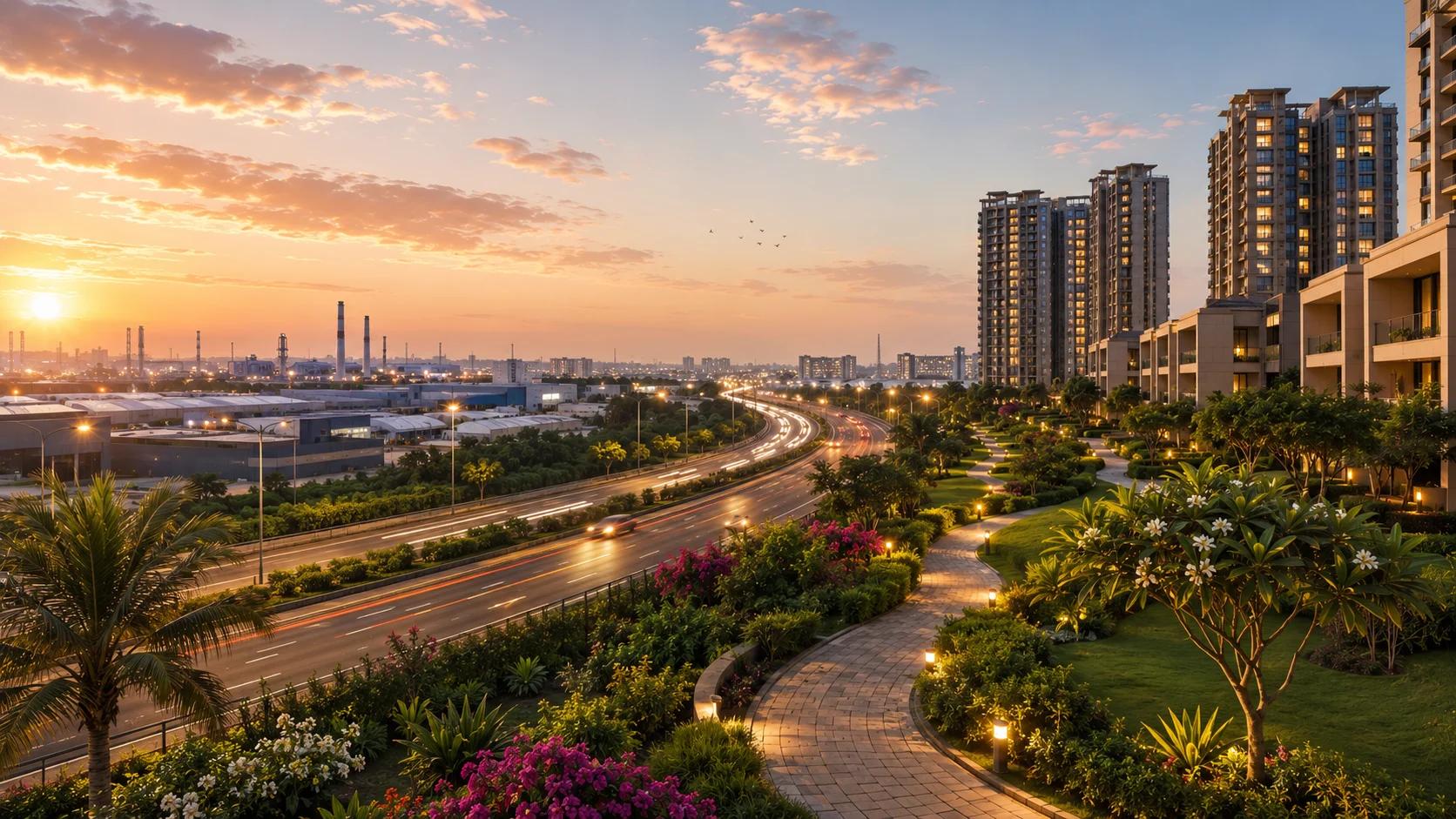
Once a quiet village, Manesar has transformed into a dynamic industrial and real estate centre, benefiting from significant infrastructure development including the widening of National Highway 48 and its strategic location within the Delhi-Mumbai Industrial Corridor. The establishment of Industrial Model Township by HSIIDC has attracted a multitude of small, medium, and large-scale enterprises, particularly in automotive, electronics, and pharmaceutical sectors. The growth of industries in Manesar has led to a surge in demand for both commercial and residential properties.
When manufacturing scales, it does not just create factory jobs. It creates demand for housing, retail, schools, hospitals, and office space for the management and white-collar layer that every large manufacturing operation requires. This is the structural force now reshaping Manesar's real estate map and it is fundamentally different from the road-led growth that defined Gurgaon's last decade.
Why Manufacturing-Led Growth Is Different and Arguably More Durable
Road and metro-led appreciation, like what happened on Dwarka Expressway, tends to play out in a relatively compressed window, prices re-rate sharply once the infrastructure becomes operational, then stabilise.
Manufacturing-led growth works differently. It compounds gradually and durably, because it is tied to actual industrial output and employment, not a one-time connectivity event.
For decades, Manesar has been a cornerstone of India's industrial landscape, housing major players like Maruti Suzuki, Honda, and numerous ancillary units within its Industrial Model Township. This industrial backbone has historically driven demand for labour accommodation and basic infrastructure. However, with Gurugram reaching saturation point in several areas and property prices skyrocketing, Manesar has emerged as a natural extension.
Historically, plotted and villa townships in growth corridors outperform high-density towers over longer investment cycles. Infrastructure is the backbone of price appreciation. Delhi-Gurgaon communication is strengthened via NH-48. KMP Expressway is increasing trade and logistics. The Delhi-Mumbai Industrial Corridor provides sustained economic enhancement.
This is the key distinction for investors: Manesar's growth case is not a bet on a single road opening. It is a bet on India's broader manufacturing expansion, the "Make in India" push, global supply chain diversification away from China, and the deepening of the DMIC corridor all of which have multi-decade tailwinds rather than a one-time catalyst.
The Numbers Behind the Manesar Industrial Real Estate Boom
The NCR, and in particular the Gurugram-Manesar corridor, has become the hotspot of manufacturing, logistics, and technology-driven businesses. Industrial plots in Manesar are available across multiple sectors, with pricing beginning competitively and offering high ROI for investors entering the corridor.
Manesar isn't just another industrial area it is the epicentre of India's manufacturing revolution and a critical node in the Delhi-Mumbai Industrial Corridor. The $100 billion DMIC positions Manesar as a primary beneficiary. Industrial land in DMIC zones historically appreciates 200–300% within 5-7 years. Manesar industrial land appreciated 180% in the last five years between 2020 and 2025, outperforming Gurugram's commercial sectors significantly.
A 180% appreciation in industrial land over five years, outperforming Gurgaon's own commercial sectors is a number that deserves attention from anyone evaluating where Gurgaon's next growth story is being written.
What Manufacturing Demand Is Doing to Residential Real Estate in Manesar
The industrial boom is not staying confined to factory land. It is spilling directly into residential demand and this is where the opportunity for homebuyers and residential investors becomes clear.
IMT Manesar, which was first established as an industrial centre, is currently going through a structural change. The employment base from automotive, logistics, and manufacturing industries is driving residential demand in the surrounding corridor. The next real estate appreciation cycle in Gurgaon will be driven not just by luxury high-rises, but by land-backed township ecosystems with controlled density.
The mechanism is straightforward and proven across every industrial belt globally: factories need managers, engineers, supervisors, and corporate staff. Those professionals need quality housing within a reasonable commute. As Manesar's manufacturing base scales driven by automotive expansion, electronics manufacturing, and pharmaceutical production, the demand for residential property in the surrounding sectors grows in tandem.
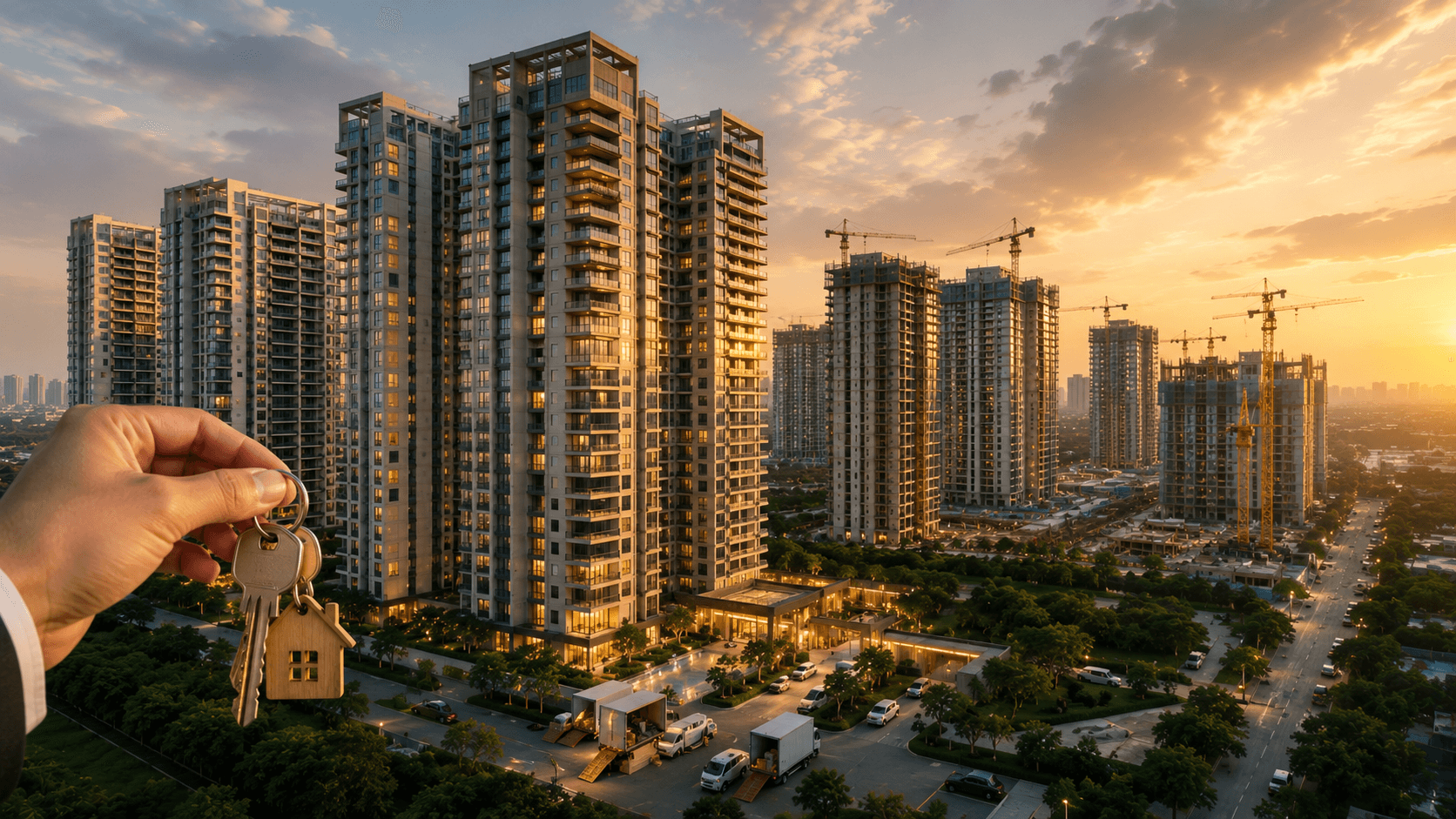
As central Gurgaon reaches saturation, the New Gurgaon corridor surrounding Manesar is where the next decade of wealth creation and urban expansion is officially centred. Manesar offers a strategic spot on NH-48 and KMP Expressway, plus proximity to industrial hubs, making it a top growth centre. By blending the industrial strength of Manesar with luxury residential expertise, developers are offering a unique value proposition: high capital growth, steady rental yields, and an uncompromising lifestyle.
The Township Model: Why Manesar's Best Projects Look Different From Typical Gurgaon Launches
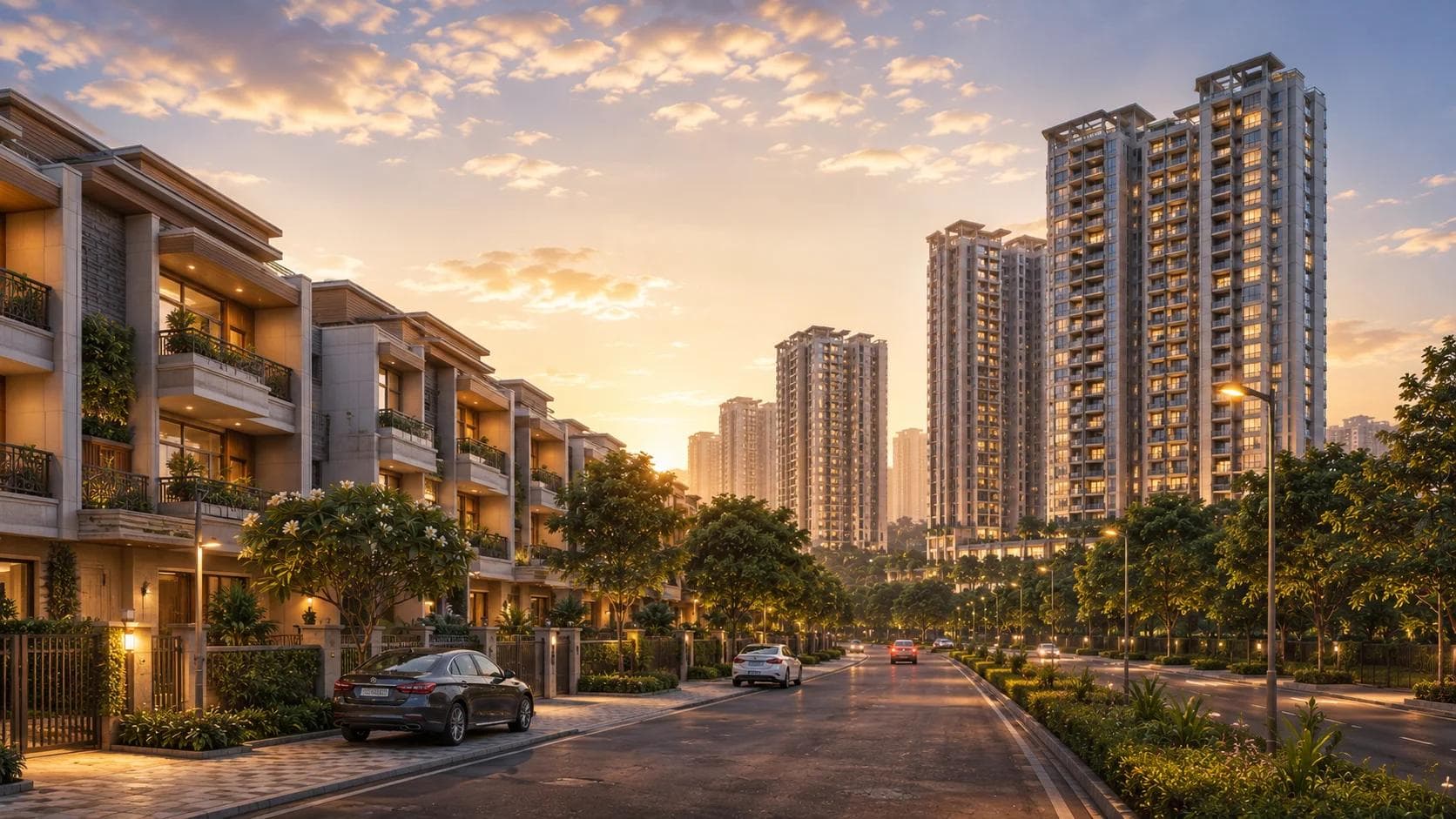
One distinctive feature of Manesar's residential growth is the dominance of the township model - large, master-planned developments rather than standalone high-rise towers.
The township model against conventional tower clusters is one of the most significant strategic distinctions in IMT Manesar. Township-scale planning helps control oversupply. End-user transactions are gradually replacing investor resale as the source of liquidity. Credibility of execution is increased by the developer's reputation in this corridor.
This matters for two reasons. First, township-scale developments create their own self-contained ecosystems - schools, retail, healthcare, recreation reducing dependency on the surrounding area's maturity timeline. Second, the controlled density of township planning historically supports more stable, sustained appreciation compared to high-density tower clusters that can face oversupply risk if too many similar projects launch simultaneously.
M3M's strategic location on NH-48 and KMP Expressway, with direct access to NH-48, the KMP Expressway, and the upcoming Dwarka Expressway, ensures effortless travel across the entire National Capital Region, what is described as a "Three-Road Advantage."
Connectivity: Why Manesar Is No Longer Isolated
A fair concern for any investor evaluating Manesar is connectivity - historically, the area's distance from central Gurgaon was its primary limitation.
GIC's location is arguably its most significant competitive edge, placing it at the nexus of major national and regional growth corridors. Located off NH-8, GIC offers effortless access to Gurugram city and Jaipur. Direct connectivity is ensured via the Dwarka Expressway Link Road, providing high-speed transit to IGI Airport and Delhi. The township is strategically linked to the KMP Expressway and is on the route to the upcoming Delhi-Mumbai Expressway. This four-way expressway connectivity ensures superior logistical advantage and travel convenience for both residents and businesses.
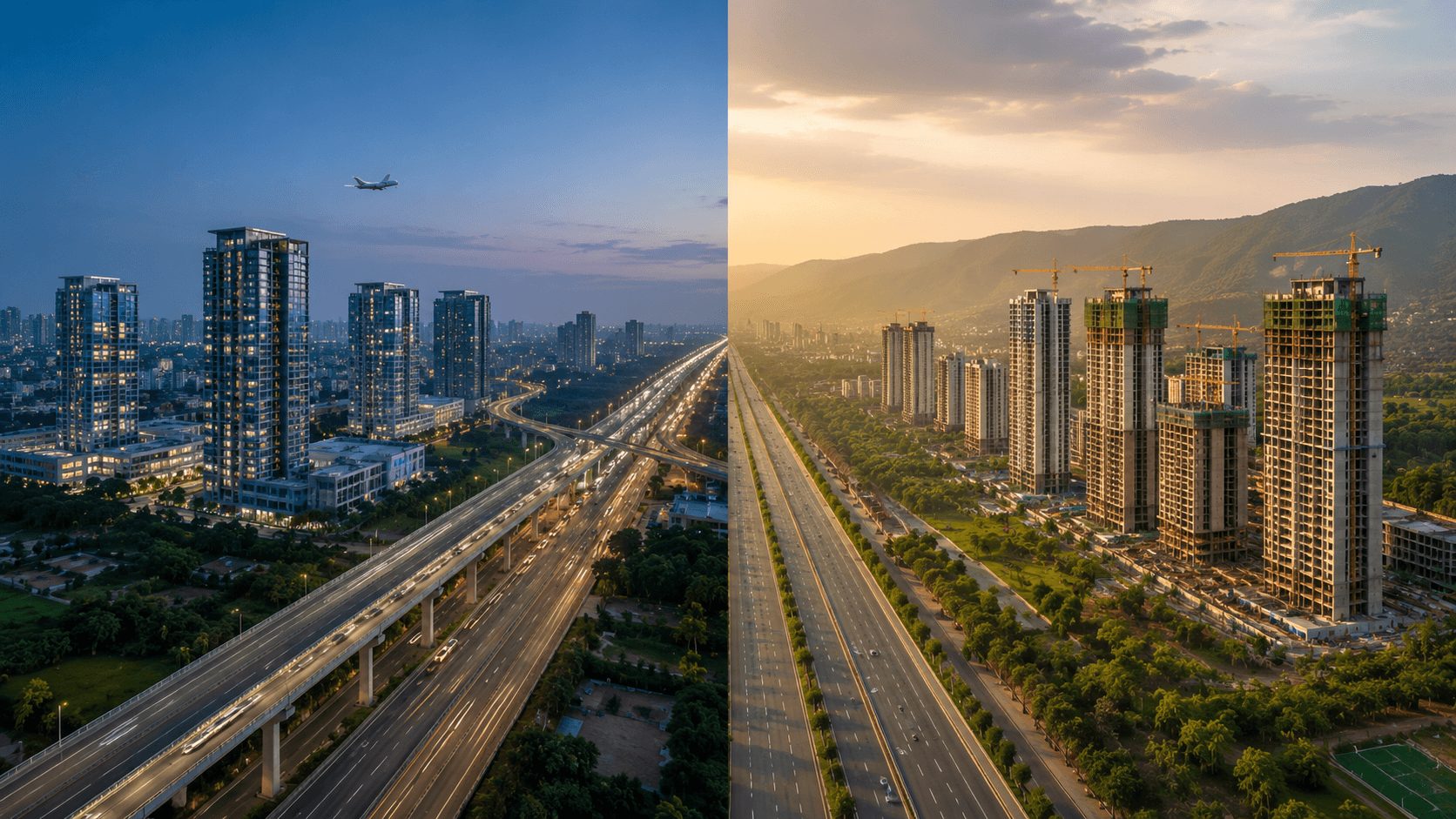
This is the connectivity transformation that changes the Manesar investment thesis. A decade ago, Manesar was genuinely peripheral. Today, with NH-48, KMP Expressway, the Dwarka Expressway link road, and proximity to the Delhi-Mumbai Expressway all converging, Manesar sits at a four-way logistics and connectivity hub that few other Gurgaon-adjacent locations can match.
Who Should Be Looking at Manesar Right Now
Industrial and commercial investors with a 5-7 year horizon should look at industrial plots directly. M3M Industrial Plots in Sector 9 and 11 offer freehold property with long-term security and full control, with flexible plot sizes starting from 500 sq metres, suitable for MSMEs, large manufacturing facilities, and logistics hubs. This is the highest-conviction, highest-ceiling play on this list, but it requires patience and tolerance for the earlier-stage risk profile that comes with frontier industrial corridors.
Residential end-users and investors should focus on township-format developments from credible developers - M3M, and others entering the corridor, rather than standalone smaller projects. The township model offers better long-term liquidity, controlled density, and self-contained social infrastructure that reduces dependency on the surrounding area maturing on its own timeline.
Patient, long-horizon investors comfortable with a 7–10 year view should treat Manesar as a genuine frontier opportunity, comparable to where Dwarka Expressway sat around 2015–2016, before the infrastructure and demand fully crystallised.