Direct Answer
End-users are replacing investors in many parts of Gurgaon because the city has evolved from a future-growth market into a more mature residential destination. As infrastructure, workplaces, schools, healthcare facilities, and residential communities become established, buyers are increasingly choosing homes based on livability and long-term usability rather than purely on appreciation potential.
Why Buyer Conversations Have Changed
For years, Gurgaon was viewed primarily as a growth story. Buyers entered emerging sectors hoping to benefit from future infrastructure, improving connectivity, and rising property values. Investors dominated conversations, and the success of a project was often measured by appreciation potential rather than its suitability as a place to live.
That conversation is gradually changing.
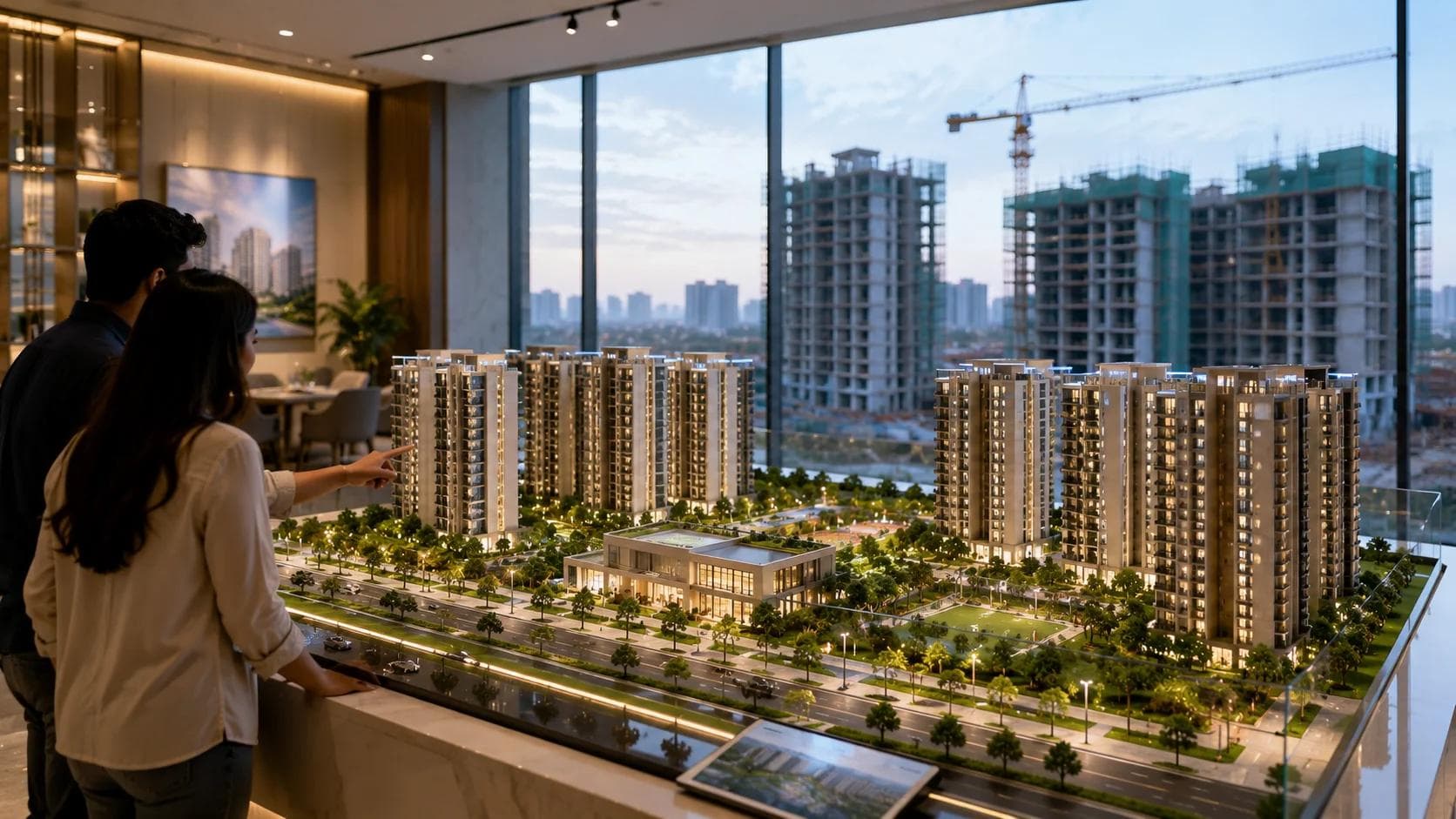
Today, many buyers walking into project sales galleries are asking very different questions. Instead of focusing exclusively on future returns, they want to know how practical a location is for everyday life. They ask about commuting time, school accessibility, healthcare facilities, community infrastructure, occupancy levels, and the quality of life they can expect once they move in.
This shift reflects a broader transformation taking place across Gurgaon's residential market. As the city matures and several of its major growth corridors evolve into established residential ecosystems, demand is increasingly being shaped by people who intend to live in the homes they purchase.
The change is not necessarily about investors disappearing from the market. Gurgaon continues to attract investment capital across multiple segments. However, end-users are becoming a much more influential force in determining which projects perform well, which locations attract sustained demand, and what kind of housing developers choose to build.
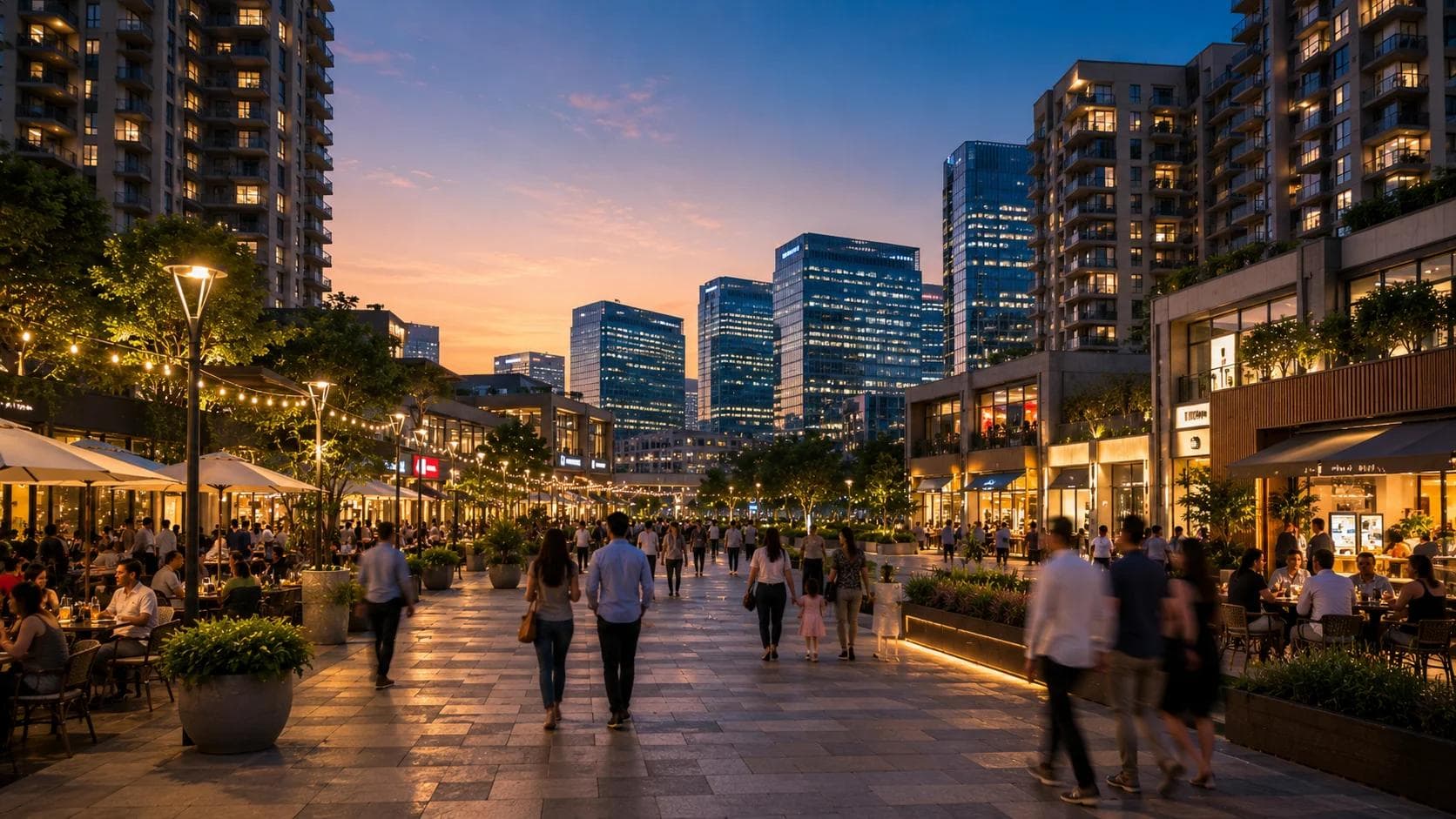
The reason is simple. Gurgaon today is very different from the Gurgaon of ten or fifteen years ago. Many parts of the city are no longer selling a promise of future growth. They are offering an existing lifestyle, functioning infrastructure, and established communities. As a result, buyers are increasingly evaluating homes through the lens of daily living rather than future speculation.
Where End-User Demand Is Strongest in Gurgaon
Not all parts of Gurgaon are witnessing this transition at the same pace. Different micro-markets are at different stages of maturity, and that directly influences the kind of buyers they attract.
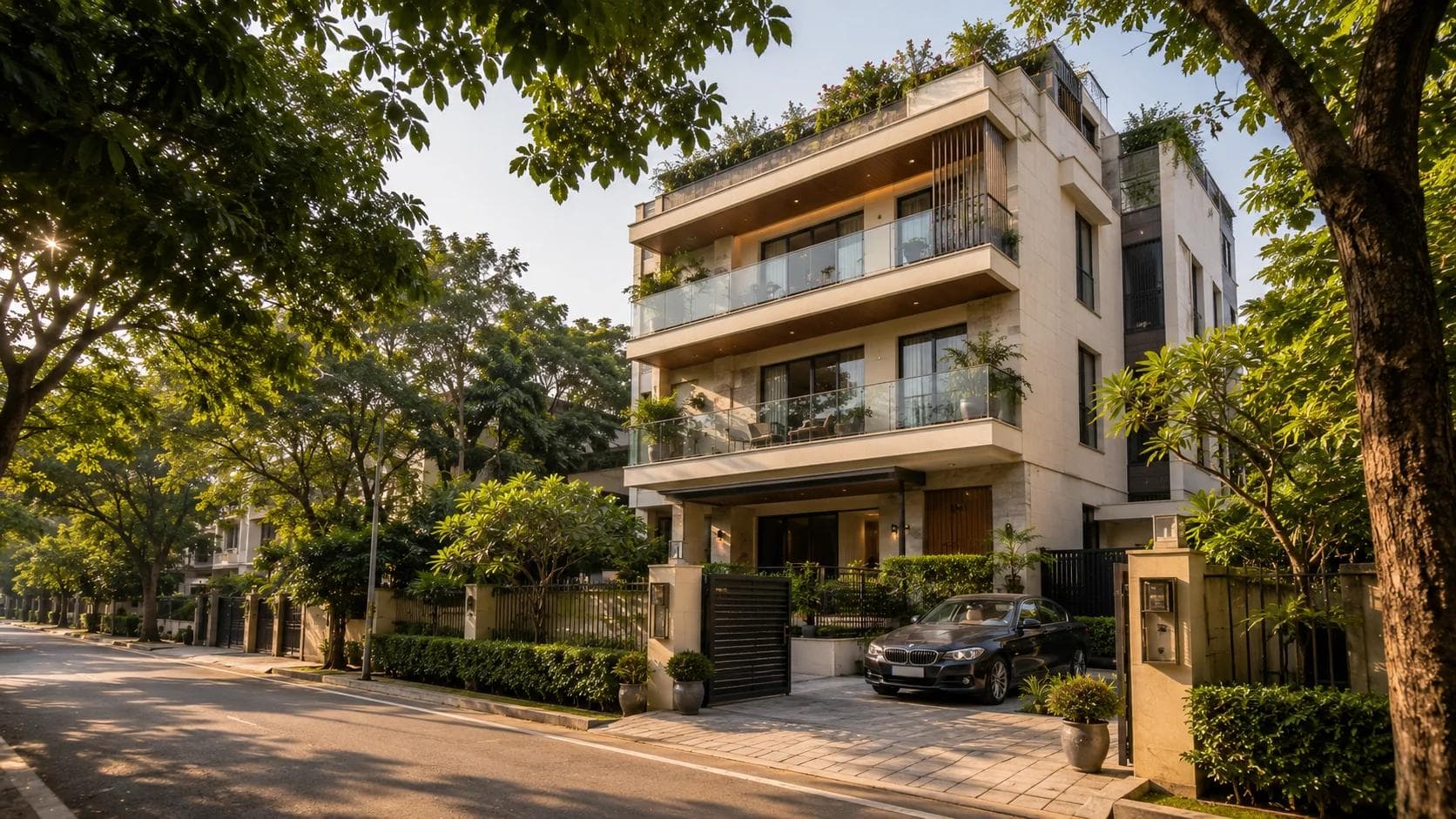
Golf Course Road remains one of the strongest examples of an end-user-driven market. Its appeal comes from a combination of established infrastructure, proximity to major employment hubs, premium residential communities, retail destinations, and social amenities. Buyers entering this market are often prioritising convenience and long-term lifestyle considerations rather than short-term appreciation.
Golf Course Extension Road is experiencing a similar shift. What was once considered a developing corridor has evolved into a more complete residential ecosystem. Schools, hospitals, retail centres, and community infrastructure have improved significantly over the years, making the location increasingly attractive to families looking for a primary residence.
New Gurgaon continues to attract buyers seeking relatively larger homes and value-oriented options. However, demand is becoming more selective. Buyers are increasingly favouring projects surrounded by visible infrastructure, rising occupancy levels, and improving social amenities rather than choosing purely on pricing.
The Dwarka Expressway corridor also illustrates how buyer behaviour is evolving. Historically viewed as an investor-driven market, the area is gradually attracting more end-users as connectivity improves and residential communities become operational. As infrastructure moves from planning to execution, confidence among self-use buyers continues to strengthen.
Even emerging corridors such as Sohna are witnessing growing interest from end-users who are willing to take a longer-term view in exchange for affordability and future growth potential.
The common factor across all these locations is that buyers are evaluating livability alongside appreciation. That distinction is becoming increasingly important.
Why Gurgaon Is No Longer Just a Future Growth Story
One of the biggest reasons behind the rise of end-user demand is the changing nature of Gurgaon itself.
For much of its growth journey, Gurgaon was a city driven by future expectations. New roads, emerging business districts, and expanding infrastructure created opportunities for investors willing to take calculated risks. Many buyers entered the market because they believed the city would become more valuable over time.
In many ways, that prediction proved correct.
Over the years, Gurgaon developed into one of India's most important business and residential destinations. Large commercial districts emerged, employment opportunities multiplied, and infrastructure improved across several key corridors. As a result, many locations that were once considered peripheral are now established urban neighbourhoods.
As cities mature, buyer priorities naturally evolve.
When a market is still developing, future growth often dominates decision-making. Once that market reaches a certain level of maturity, attention shifts toward usability. Buyers begin evaluating how comfortably they can live in a location today rather than what it might look like several years from now.
This transition is particularly visible among working professionals and families. Access to schools, hospitals, retail centres, recreational spaces, and workplaces has become increasingly important. Homebuyers are no longer looking at properties solely as financial assets. They are looking for environments that support their lifestyle requirements.
This change does not eliminate the role of investment. Instead, it creates a healthier balance between investment demand and genuine residential demand. Markets supported by strong end-user participation often display greater stability because demand is rooted in practical need rather than speculation alone.
What End-Users Are Actually Paying For Today
Many people assume that property prices are determined primarily by size, luxury specifications, or branding. While these factors certainly influence buying decisions, they are not necessarily the primary drivers of end-user demand.
Increasingly, buyers are paying for convenience, accessibility, and quality of life.
Commute Certainty
For professionals working in Gurgaon and surrounding business districts, daily travel remains one of the most important considerations.
A home that reduces commuting stress can significantly improve overall quality of life. This is why locations with strong connectivity often attract sustained end-user demand even when they command premium pricing.
Buyers increasingly understand that a lower purchase price may not compensate for years of longer commute times and reduced convenience.
Infrastructure Readiness
Investors are often willing to wait for infrastructure. End-users generally prefer infrastructure that already exists.
Operational roads, public transport options, healthcare facilities, schools, and retail destinations create confidence among buyers planning to move in immediately. As a result, projects located within established ecosystems often enjoy stronger end-user demand than projects relying heavily on future promises.
Community Living
The idea of home ownership has expanded beyond the apartment itself.
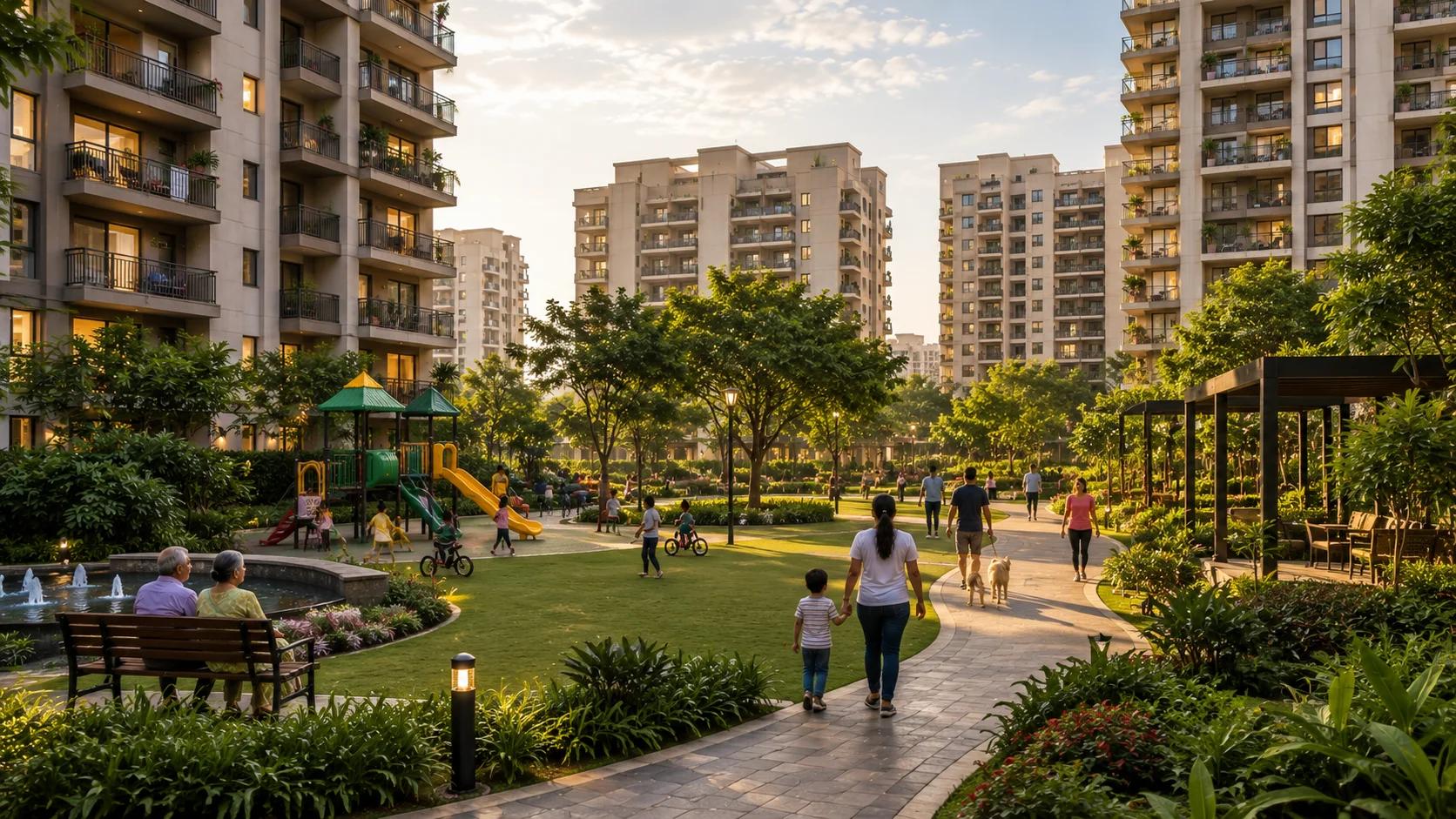
Families increasingly evaluate the community they will become part of. They want active neighbourhoods, social engagement opportunities, recreational amenities, and well-maintained common areas. Occupied communities often feel more attractive than isolated developments, even when the latter offer newer infrastructure.
A functioning community contributes significantly to long-term residential satisfaction.
School and Healthcare Access
For family buyers, access to quality educational institutions and healthcare facilities remains a major consideration.
Parents frequently prioritise convenience and accessibility when selecting a residential location. The presence of schools, hospitals, and supporting social infrastructure can influence buying decisions as much as project amenities.
This is one reason mature residential corridors continue attracting strong end-user demand.
Long-Term Usability
End-users typically evaluate properties through a longer-term lens.
They are not simply asking whether a home can appreciate in value. They are asking whether the property will continue meeting their needs over the next five, ten, or even fifteen years.
This perspective influences everything from location selection to project configuration and community infrastructure.
How To Identify an End-User Driven Market
Just as buyers evaluate projects, they should also evaluate the nature of demand within a location.
Understanding whether a market is driven primarily by investors or end-users can provide valuable insights into its long-term stability.
Check Occupancy Levels
One of the simplest indicators is occupancy. Projects with high occupancy levels typically reflect genuine residential demand. Active communities, functioning retail outlets, and visible daily activity often indicate that people are choosing to live in the area rather than merely invest in it.
Evaluate Existing Infrastructure
Infrastructure readiness matters. Buyers should assess whether roads, public transportation, schools, hospitals, and commercial facilities are already functioning or still dependent on future execution. Markets supported by existing infrastructure often attract stronger end-user participation.
Assess Everyday Convenience
A location may appear attractive on paper but feel impractical in daily life. Evaluating grocery access, recreational facilities, commuting routes, and social infrastructure can help buyers understand how livable a location truly is.
Look Beyond Launch Hype
Marketing campaigns can generate excitement, but sustainable demand is created through usability. Buyers should focus on long-term fundamentals rather than temporary launch momentum. Markets driven primarily by hype may experience fluctuations once initial enthusiasm subsides.
Why Developers Are Paying Attention
Developers are responding to this shift in buyer behaviour. As end-user participation increases, project design priorities are evolving.
Amenity Ecosystems
Developers are creating more comprehensive amenity offerings rather than relying solely on luxury positioning. Clubhouses, wellness facilities, recreational spaces, and community infrastructure are becoming increasingly important.
Wellness and Open Spaces
The pandemic accelerated demand for healthier living environments. Buyers now place greater value on open spaces, walking tracks, landscaped areas, and wellness-focused amenities.
Family-Centric Planning
Project planning increasingly reflects the needs of families rather than speculative investors. Larger community areas, child-friendly spaces, and integrated social infrastructure are becoming more common.
Community Development
Developers understand that end-users are buying into communities, not just apartments. As a result, greater emphasis is being placed on creating neighbourhood experiences that support long-term occupancy and engagement.
What Risks Buyers Should Still Consider
While the rise of end-user demand is generally positive, buyers should avoid assuming that every project automatically benefits from this trend.
Some locations continue facing infrastructure challenges. Others may experience oversupply. In certain markets, expectations may still outpace actual demand.
Buyers should also avoid assuming that all projects within a corridor will perform equally. Micro-location, accessibility, surrounding development, and project execution continue playing important roles.
Another common mistake is confusing occupancy with quality. A populated project is not necessarily the right project. Buyers should still evaluate construction standards, maintenance quality, community management, and long-term sustainability.
End-user demand improves market stability, but it does not eliminate the need for careful due diligence.
The Market Is Growing Up
The evolution of Gurgaon's residential market reflects the evolution of the city itself.
For years, growth was driven primarily by future expectations. Investors played a crucial role in supporting development and identifying opportunities in emerging locations. Their contribution helped shape many of the corridors that define Gurgaon today.
However, as these locations mature, a new phase is emerging.
Increasingly, buyers are choosing homes because they want to live in them. They are evaluating locations based on convenience, community, infrastructure, and lifestyle. They are asking practical questions about daily living rather than focusing exclusively on appreciation forecasts.
This shift is not a sign that investment opportunities are disappearing. Instead, it suggests that Gurgaon is becoming a more balanced and mature residential market.
The city is no longer being purchased solely for what it might become. In many of its key corridors, it is being purchased for what it already is.
And that may be one of the strongest indicators of long-term market strength.