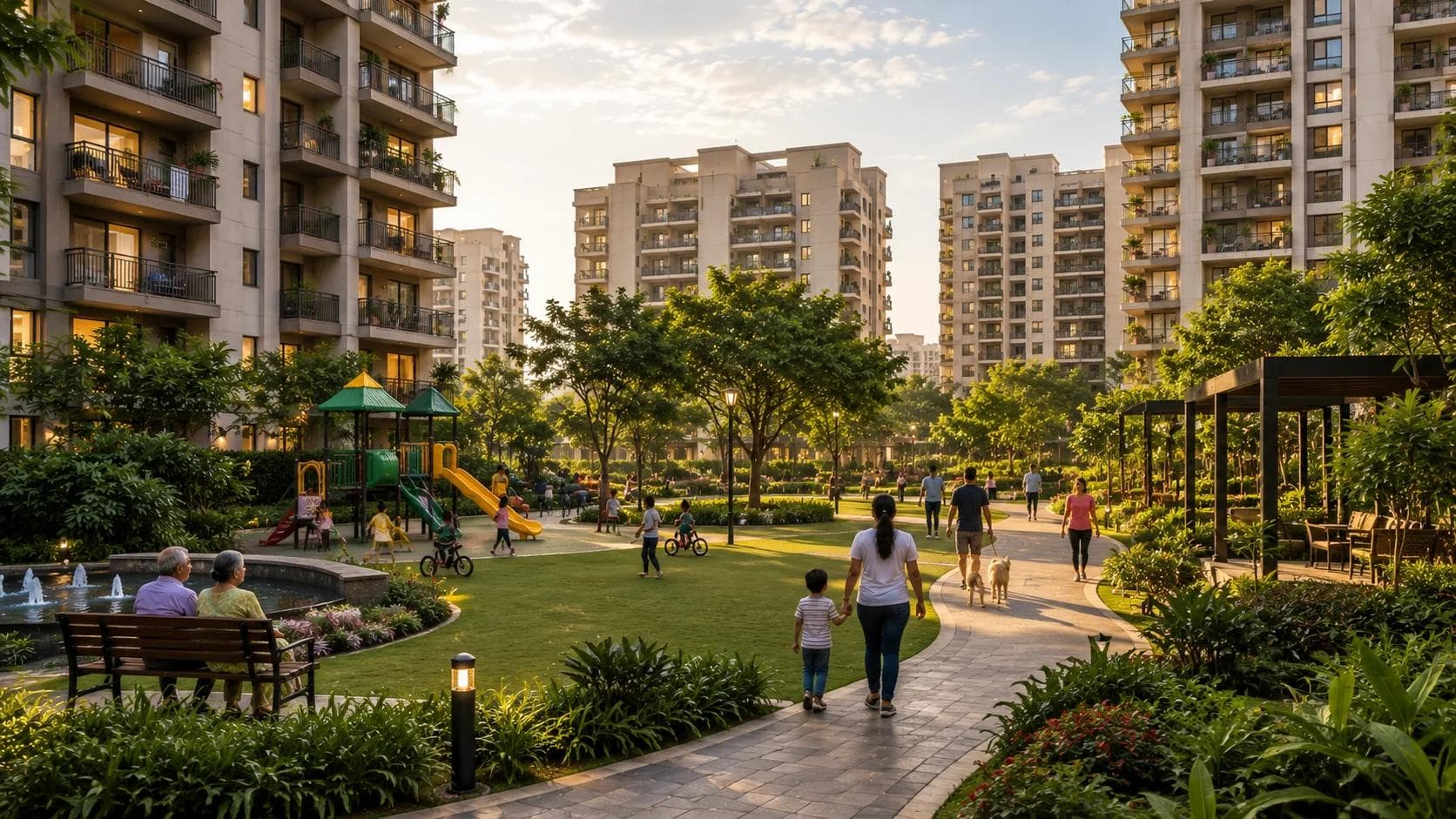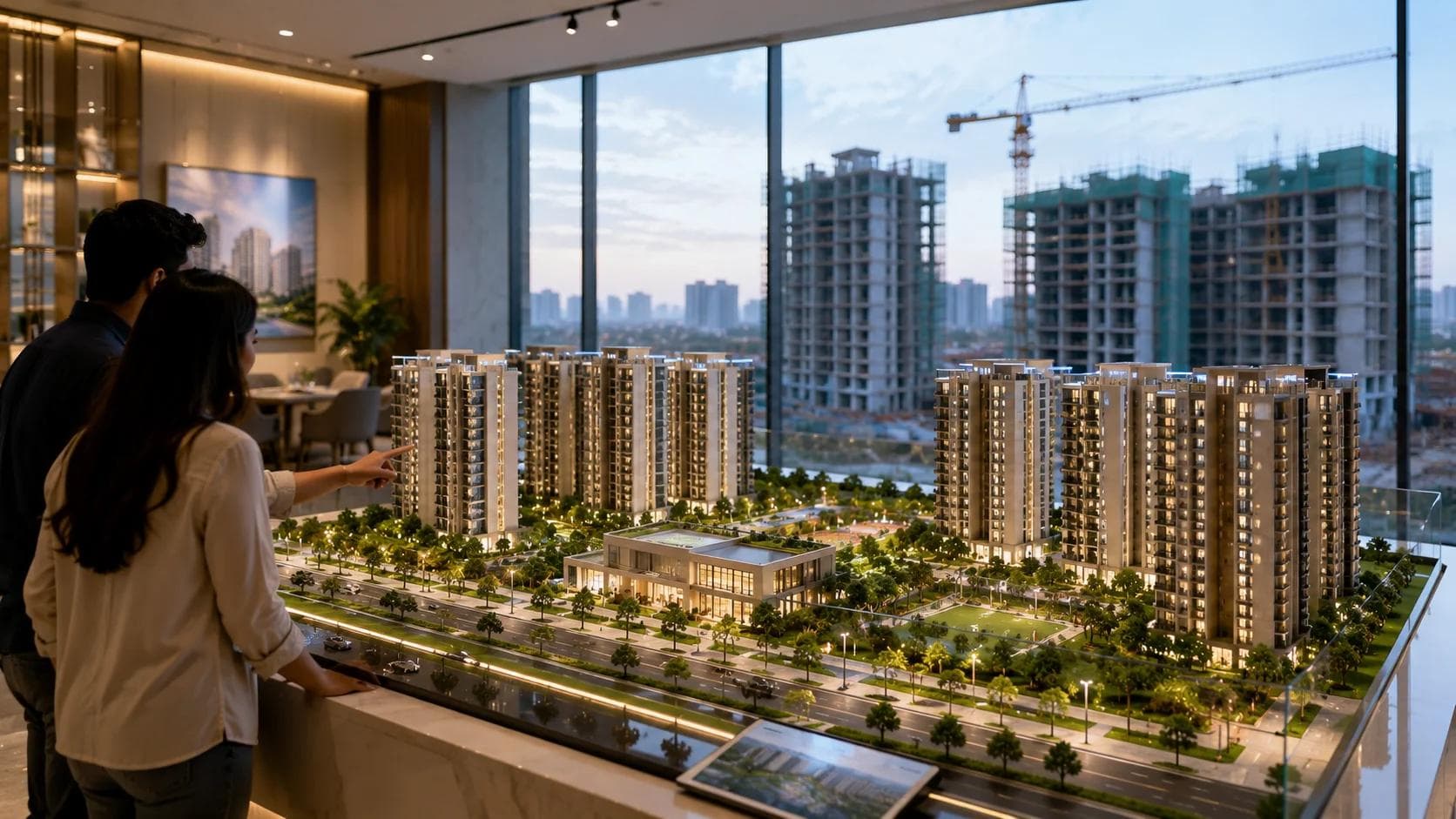

The GCC boom is creating new real estate hotspots in Gurgaon by generating sustained demand for housing, rentals, and supporting infrastructure around major employment hubs. As Global Capability Centres continue expanding across the city, residential corridors with strong connectivity and lifestyle infrastructure are emerging as some of the most closely watched real estate markets.
Why GCC Growth Is Becoming a Real Estate Story
For years, Gurgaon's real estate growth was largely explained through infrastructure. New roads, metro extensions, expressways, and commercial districts often determined which locations would emerge as the next residential hotspots. While infrastructure remains a critical factor, another force is increasingly shaping the city's residential landscape: employment generation.
More specifically, the rapid expansion of Global Capability Centres (GCCs).
India has become one of the world's preferred destinations for multinational companies looking to establish technology, operations, analytics, finance, engineering, and innovation hubs. Gurgaon has emerged as one of the key beneficiaries of this trend. Today, the city hosts a significant concentration of GCCs serving global enterprises across sectors such as technology, financial services, healthcare, manufacturing, consulting, and e-commerce.
The significance of this trend extends far beyond office leasing activity.
Every major employment cluster creates a ripple effect across the surrounding urban ecosystem. Professionals need homes. Families require schools and healthcare facilities. Businesses seek retail and hospitality infrastructure. Developers respond with residential projects. Over time, employment centres become catalysts for entirely new real estate ecosystems.
This is precisely why GCC growth deserves attention from homebuyers and investors alike.
The story is no longer just about where companies are setting up offices. It is increasingly about which residential corridors are benefiting from the workforce these companies bring into the city.
How GCCs Influence Residential Demand
Every GCC announcement may appear to be a commercial real estate event, but its effects extend much further. The mechanism is essentially a self-reinforcing cycle: GCC expansion leads to job creation, job creation drives workforce migration, that migration creates housing demand, housing demand attracts retail and social infrastructure, improved infrastructure raises an area's attractiveness, and that attractiveness fuels new residential development.
When companies expand their workforce, they create demand across multiple housing segments. Some employees seek rental accommodation close to workplaces. Others relocate permanently and purchase homes. Senior professionals may prefer premium residential communities, while younger employees often gravitate toward emerging corridors that offer affordability and connectivity.
Over time, these individual housing decisions accumulate into meaningful residential demand.
As workforce populations increase, developers gain confidence in launching new projects. Retail brands follow residential growth. Schools and healthcare providers expand their presence. Infrastructure improvements accelerate. The result is a self-reinforcing cycle that can transform entire micro-markets.
This pattern has played out repeatedly across major global cities and continues to shape Gurgaon's urban evolution today.
Which Gurgaon Corridors Are Benefiting from GCC Growth?
While GCC activity influences the broader city, some residential corridors are benefiting more directly than others.
Southern Peripheral Road (SPR)
SPR has emerged as one of Gurgaon's most closely watched residential corridors in recent years. Improved connectivity, large-scale residential development, and proximity to established commercial districts have strengthened its appeal among both end-users and investors.
As employment nodes continue expanding across Gurgaon, SPR benefits from its ability to connect residents with multiple business districts rather than relying on a single employment centre. This flexibility has become increasingly important in a city where workplace locations continue evolving.
The corridor also offers a mix of premium and upper-mid-segment residential projects, allowing it to attract a diverse buyer profile.
Dwarka Expressway
Few corridors have generated as much attention as Dwarka Expressway.
Historically viewed through the lens of infrastructure development, the corridor is now entering a more mature phase where residential communities are becoming operational and connectivity advantages are increasingly visible.
For professionals working across Gurgaon and Delhi, the expressway enhances accessibility while opening up new residential options. As workforce mobility increases, locations offering efficient connectivity often gain a competitive advantage.
This is one reason Dwarka Expressway continues attracting significant buyer interest.
New Gurgaon
New Gurgaon occupies a unique position within the city's residential landscape.
The corridor combines relative affordability with improving infrastructure and access to employment centres. For many professionals entering Gurgaon's workforce ecosystem, it provides an opportunity to access larger homes at comparatively competitive price points.
As GCC expansion supports long-term employment growth, value-driven residential markets such as New Gurgaon may continue benefiting from sustained demand.
Golf Course Extension Road
Golf Course Extension Road occupies a different segment of the market.
The corridor has evolved into a premium residential destination supported by strong social infrastructure and connectivity. It attracts professionals seeking established communities, lifestyle amenities, and proximity to key business districts.
As senior management and leadership roles within GCCs continue expanding, premium residential corridors may experience increasing demand from higher-income households prioritising convenience and lifestyle quality.
Beyond Home Purchases: The Rental Market Effect
One of the earliest signs of employment-driven real estate growth often appears in the rental market.
Not every professional relocating to Gurgaon purchases a home immediately. Many begin by renting while they familiarise themselves with the city, evaluate locations, and understand long-term plans.
This creates significant demand for quality rental housing.
Areas located near major employment hubs often experience increased rental activity because convenience remains a top priority for working professionals. Strong rental demand can benefit property owners while also attracting further residential investment.
Over time, healthy rental markets often act as indicators of broader residential growth.
They demonstrate that people are not merely investing in an area, they are actively choosing to live there.
For this reason, rental performance frequently becomes an important signal when evaluating emerging real estate hotspots.
How Employment Growth Shapes Everyday Infrastructure
One of the most overlooked aspects of GCC expansion is its impact on urban infrastructure beyond housing.
As workforce populations increase, demand grows for services that support everyday life. Educational institutions, healthcare providers, retail destinations, restaurants, entertainment venues, and recreational facilities all benefit from rising residential populations.
This process helps transform locations from isolated residential clusters into complete urban ecosystems.
For homebuyers, this evolution matters because quality of life depends on more than residential projects alone. Access to supporting infrastructure often plays a major role in determining long-term satisfaction and property demand.
Areas capable of developing balanced ecosystems tend to sustain stronger residential appeal over time.
This is one reason why employment growth can have such a profound influence on real estate performance. The impact extends far beyond office buildings.
How to Identify a GCC-Led Growth Corridor
Not every location marketed as a growth corridor will necessarily benefit equally from GCC expansion.
Buyers should evaluate multiple factors before assuming that employment growth will automatically translate into residential success.
Check Employment Accessibility
The first consideration should be accessibility. A residential corridor does not need to sit directly beside a commercial district, but it should provide efficient access to major employment centres. Connectivity often determines whether a location becomes attractive to working professionals. The easier the commute, the stronger the potential residential demand.
Evaluate Infrastructure Readiness
Infrastructure readiness matters just as much as future plans. Buyers should assess roads, public transportation, healthcare facilities, schools, retail centres, and everyday conveniences. Locations supported by functioning infrastructure generally attract stronger residential demand than those relying entirely on future development.
Assess Social Infrastructure
Residential decisions are rarely based on employment alone. Families evaluate educational options, healthcare access, recreational facilities, and community amenities before choosing where to live. Areas with strong social infrastructure often enjoy greater long-term appeal.
Track Developer Activity
Developer confidence can provide useful market signals. When multiple established developers begin investing in a corridor, it often reflects confidence in long-term demand fundamentals. While this should never replace independent research, it can provide additional context when evaluating emerging markets.
Which Type of Buyer Benefits Most from GCC-Led Growth?
Different buyers may benefit from GCC-driven growth in different ways.
Long-Term End Users
For end-users, employment-driven growth often translates into stronger infrastructure, improved services, and greater residential convenience over time. Locations supported by sustainable employment demand frequently evolve into more complete communities.
Rental Income Investors
Rental investors often benefit from workforce-driven housing demand. Areas attracting professionals typically experience stronger rental activity, particularly when supported by good connectivity and social infrastructure.
Capital Appreciation Investors
Employment growth can contribute to long-term property appreciation by supporting sustained residential demand. However, appreciation outcomes depend on several factors including supply dynamics, infrastructure execution, and market maturity.
NRI Buyers
NRI buyers often seek locations supported by strong long-term fundamentals rather than short-term market cycles. Employment growth can provide an additional layer of confidence when evaluating residential markets.
What Buyers Should Still Be Careful About
The GCC boom is undoubtedly creating opportunities, but buyers should avoid viewing every location through an overly optimistic lens.
One common mistake is assuming that all corridors will benefit equally from employment growth. In reality, accessibility, infrastructure, and residential quality can create significant differences between locations.
Another risk is focusing solely on future expectations while ignoring current realities. Employment growth may support long-term demand, but project selection, developer reputation, and micro-location quality remain critical.
Supply dynamics also matter. Even strong demand can be offset by excessive supply if too many projects enter a market simultaneously. Buyers should therefore evaluate both demand drivers and future inventory pipelines before making decisions.
Most importantly, they should avoid buying purely because a corridor is associated with GCC growth. The strongest investment decisions typically emerge from a broader assessment of location fundamentals.
GCCs Are Reshaping the Map, Not Just the Market
The rise of Global Capability Centres is influencing Gurgaon in ways that extend far beyond commercial real estate.
As multinational companies expand their presence, they bring jobs, talent, investment, and long-term economic activity into the city. These forces contribute to housing demand, strengthen rental markets, encourage infrastructure development, and support the growth of residential ecosystems.
For homebuyers, this creates opportunities to identify locations that may benefit from sustained demand over time. For investors, it highlights the importance of understanding how employment growth interacts with residential real estate performance.
The key takeaway, however, is that the opportunity is rarely the office building itself.
The larger opportunity often lies in the residential ecosystems forming around these employment centres.
As Gurgaon continues evolving, some of its most important real estate stories may be written not by new roads or infrastructure announcements alone, but by the thousands of professionals choosing where to live, work, and build their lives.
That is what makes the GCC boom one of the most important trends shaping the future of Gurgaon real estate.