India’s Next Big Real Estate Bet Is the One Nobody Talks About
As India's elderly population races toward 346 million by 2050, a quiet revolution is reshaping how the country thinks about ageing-and where people choose to live out their later years.
There is a conversation happening quietly in India's real estate circles-inside boardrooms of large developers, planning offices of Haryana, and increasingly at family dinner tables. It is about a segment that has long existed at the periphery but is now moving decisively to the center: senior living.
India is ageing faster than ever before. According to the UNFPA’s 2023 India Ageing Report, the population aged 60+ will nearly double from 153 million today to 346–347 million by 2050, accounting for over 20% of the population. By 2046, for the first time in Indian history, the elderly will outnumber children under 14.
This is not a distant trend-it is unfolding now.
The Gap That Defines the Opportunity
Despite having one of the largest ageing populations globally, India currently has just ~21,000 organised senior living units (CREDAI-KPMG, March 2025).
- 62% of supply is concentrated in South India
- Northern India remains significantly underserved
Meanwhile, demand is estimated at 1.8–2 million units, creating a massive gap.
The market, valued at approximately $3.55 billion in 2025, is projected to reach $14.14 billion by 2031, growing at nearly 26% CAGR-making it one of the fastest-growing real estate segments in India.
“Senior living in India is moving from being a reactive decision to a planned lifestyle choice.”
- Sunil Bhambhani, Real Estate Consultant, Gurgaon
From Old-Age Homes to Lifestyle Communities
The perception of senior living in India is undergoing a fundamental shift.
Then: Institutional, clinical, last-resort spaces
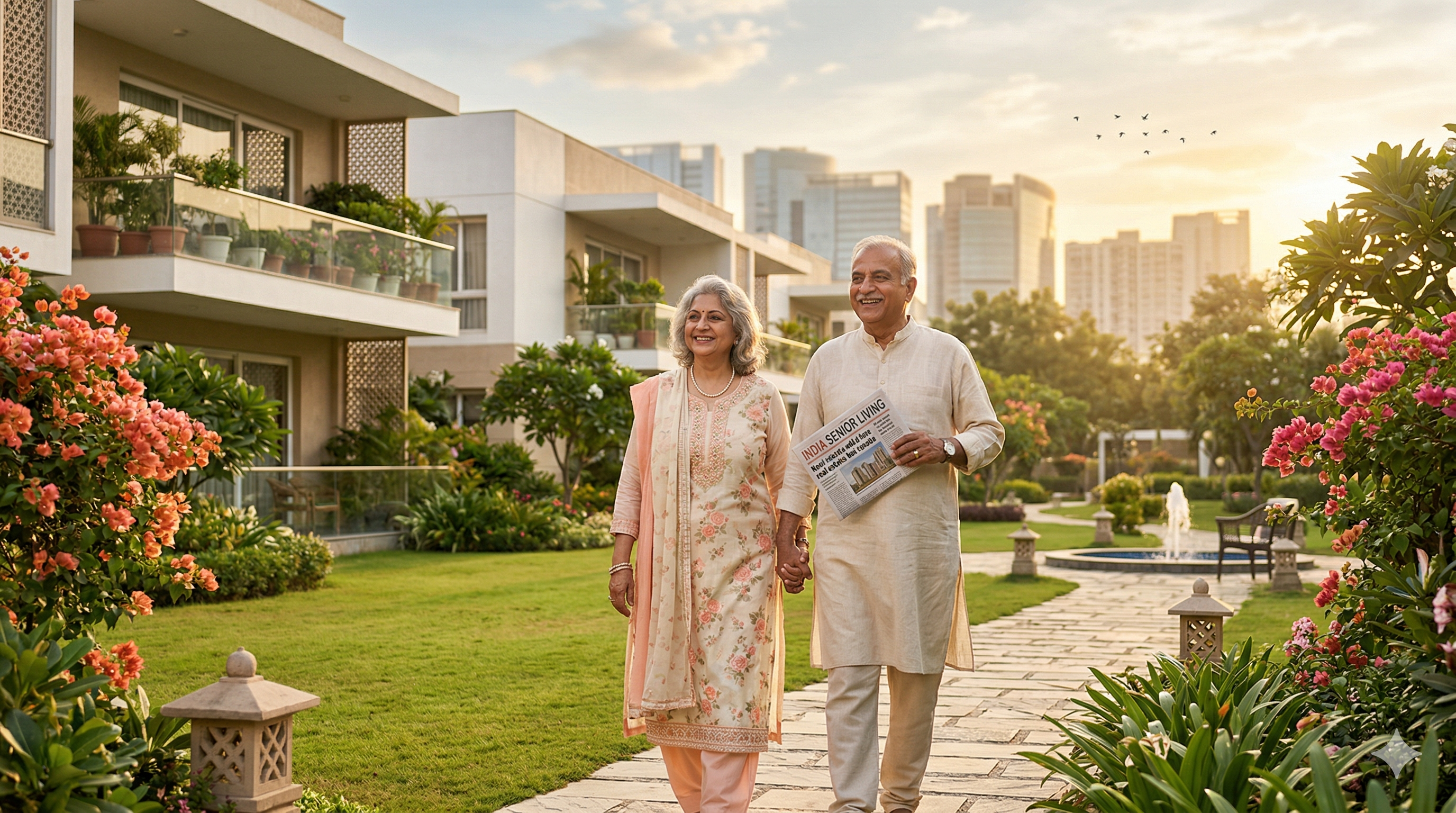
Now: Lifestyle-driven, independent, community-based living
Today’s seniors are:
- Financially independent
- Digitally connected
- Socially active
- Clear about lifestyle expectations
They are not seeking care-they are seeking quality of life with support.
Key Formats in Senior Living
Independent Living (65.1%)
Fully independent lifestyle with safety, convenience, and community.
Assisted Living (fastest-growing, 28.49% CAGR)
Support with daily activities while maintaining dignity and autonomy.
Continuum of Care
Integrated campuses allowing transition across care levels.
Memory Care
Specialised facilities addressing rising dementia cases (~7.4 million projected).
Why Gurgaon Is Leading the North
Not every city can support senior living at scale. Gurgaon stands out due to:
- Healthcare Access: Proximity to top hospitals like Medanta and Fortis
- Managed Communities: Strong base of gated, serviced housing
- Connectivity: 20–30 minutes from IGI Airport
- NRI Relevance: Ideal for globally dispersed families
These are structural advantages-not coincidences.
DLF Enters the Segment
In January 2026, DLF Ltd announced its first senior living project in Gurugram:
- Project Name: Arbour
- Estimated Revenue: ₹2,000 crore
This marks a turning point.
When a developer of DLF’s scale enters a segment, it signals:
- Institutional confidence
- Market validation
- Category maturity
Organised senior living stock has already grown from 7,147 units (2014) to 22,157 units today, with ~15,000 more expected by 2030 (₹26,000 crore investment pipeline).
What Most Families Get Wrong
Senior housing decisions in India are often reactive-triggered by:
- Health events
- Loss of a spouse
- Children moving abroad
Better outcomes come from early, proactive planning.
Key Factors Families Underestimate
1. Healthcare Proximity > On-site Medicalization
Access to a good hospital matters more than having doctors on-site.
2. Social Infrastructure Is Critical
Loneliness directly impacts cognitive decline. Community matters.
3. Daily Ease Compounds Over Time
Design features like step-free access and wide corridors become essential.
4. Emotional Wellbeing Is Core
Dignity, autonomy, and belonging are not optional-they define the experience.
The Investment Case
Senior living stands apart from other real estate categories.
Why? Because demand is not speculative-it is demographic.
Core Drivers
- Demographic Certainty
The future user base already exists today. - Massive Supply Gap
21,000 units vs ~2 million demand - End-User Driven Demand
Not investor flipping-real occupancy - Early-Mover Advantage
First-quality developments will dominate pricing power - NRI Demand
Combines care for parents with asset ownership
The market is expected to grow from $2–3 billion today to ~$12 billion by 2030, at over 30% CAGR.
The Larger Shift
Beyond numbers, a deeper cultural shift is underway.
India is redefining ageing.
The generation entering retirement today:
- Built modern India
- Benefited from economic growth
- Has global exposure
They do not see ageing as decline-but as a new life stage requiring better infrastructure.
They want:
- Communities, not institutions
- Lifestyle, not just care
- Independence with support
Conclusion
The organised senior living sector in India is still in its infancy.
- Current supply is a fraction of future demand
- Institutional capital is just beginning to enter
- Consumer mindset is rapidly evolving
Developers who move early-with quality, intent, and understanding-will not just capture a market.
They will define it.
And for now, Gurgaon is where that future is being built.