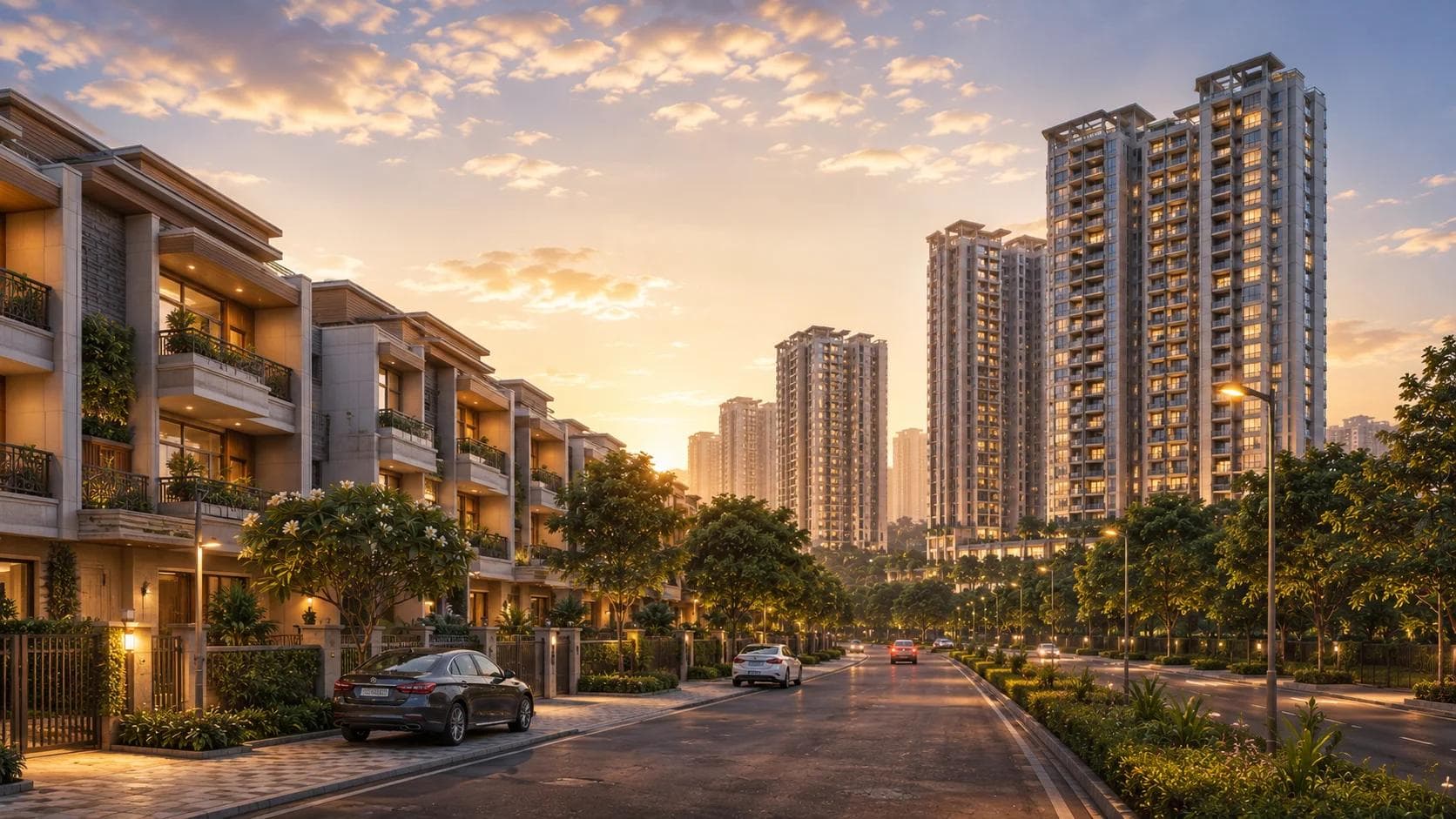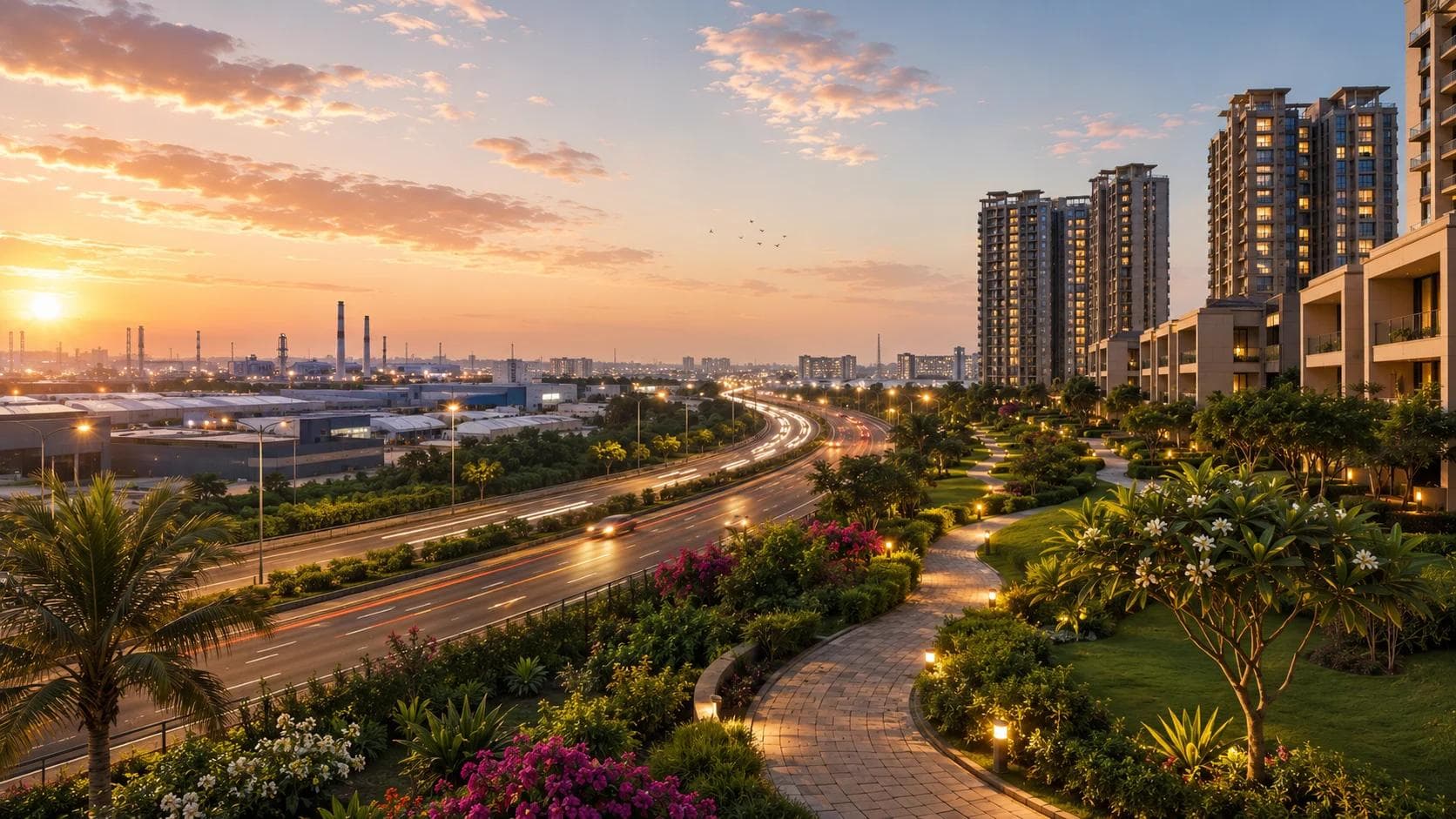
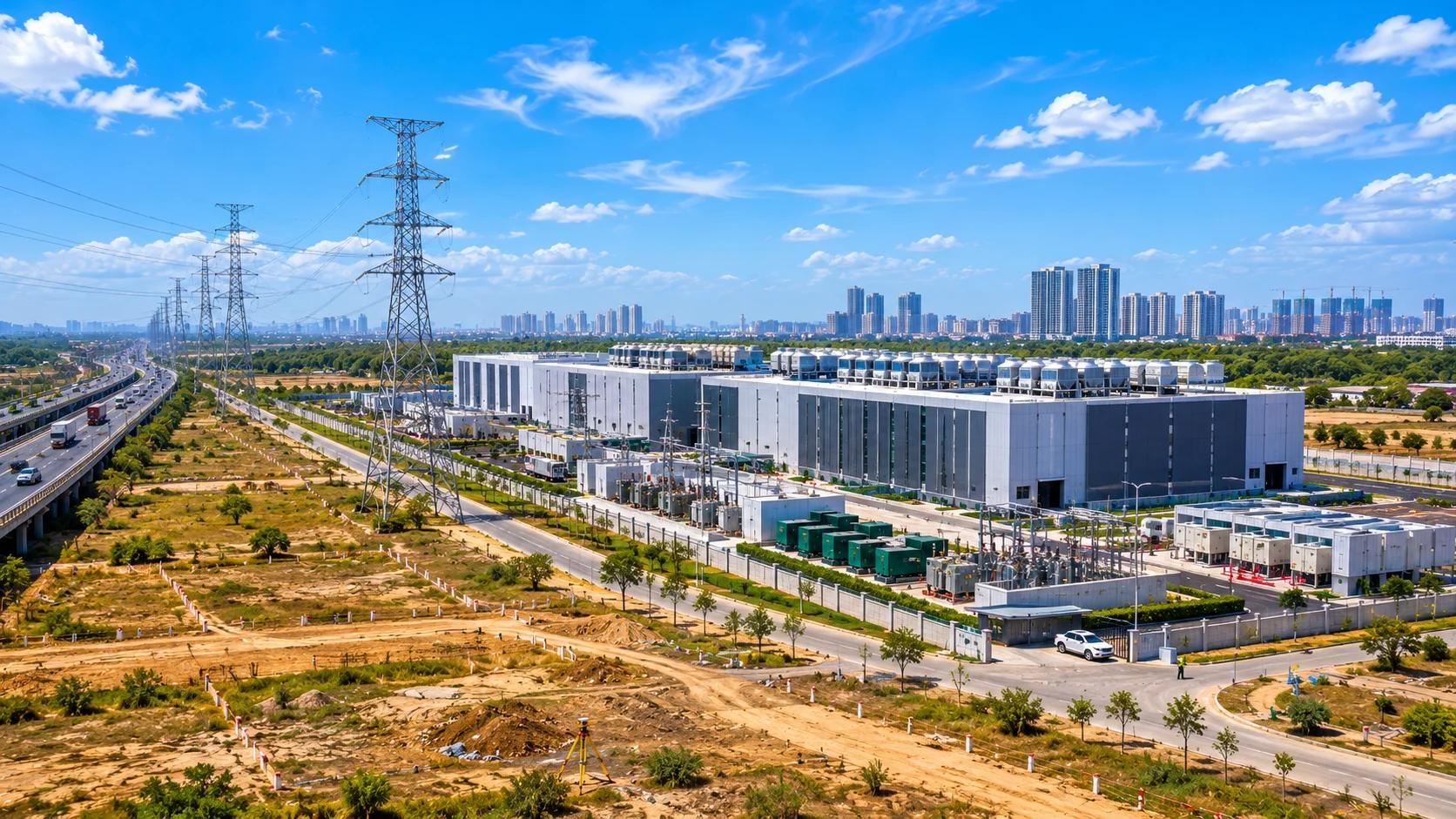
India is building AI infrastructure at a rate of 4 to 5 gigawatts of new data centre capacity each year. A significant share of that investment is landing within 50 kilometres of Gurgaon, in corridors extending from Manesar to the KMP Expressway and outward along the Sohna Road extension. The real estate consequence of this capital deployment is only beginning to be reflected in land values, residential demand, and commercial property pricing in these zones. Buyers and investors who understand this dynamic have a 24 to 36 month window before it becomes widely discussed.
The Conversation That Is Not Happening Yet
When analysts and media commentators discuss AI in India, the focus falls reliably on software companies, startup ecosystems, semiconductor policy, and digital public infrastructure. What receives far less attention, despite absorbing substantial private capital in real and measurable transactions, is the physical layer that makes AI function at scale: data centres, high-capacity fibre backbone infrastructure, uninterrupted power supply systems, and industrial-grade cooling facilities.
A large and growing portion of this infrastructure is being built in and around Gurgaon. The implications for surrounding real estate, both residential and commercial, are significant and largely unpriced by the market at this stage. This is the kind of insight that separates investors who build lasting positions from those who recognise the opportunity after the initial appreciation has already occurred.
The Scale of Investment That Is Actually Moving
India's data centre market is projected to grow from 1.2 gigawatts of operational capacity in 2023 to between 6 and 8 gigawatts by 2030, based on projections from CBRE and JLL published in their respective 2024 and 2025 India data centre reports. This growth is being funded by a combination of global hyperscaler investment and domestic operator expansion.
Global players actively investing in Indian AI infrastructure include Microsoft, Google, Amazon Web Services, and Meta. Each has made publicly announced commitments to India ranging from $3 billion to $15 billion across multi-year horizons, with data centre infrastructure representing a core component of those commitments. On the domestic side, Adani Enterprises, Nxtra (Airtel's data centre arm), CtrlS Datacenters, and STT GDC India are scaling aggressively with new campuses across the country.
At current construction and fit-out costs, each 100 megawatt data centre campus represents approximately ₹2,500 crore to ₹3,200 crore in direct physical infrastructure investment. A large-scale campus in the 300 to 500 megawatt range represents the kind of capital commitment that fundamentally reshapes the economic geography of any zone it enters.
Why Gurgaon's Peripheral Zones Are the Destination
Core Gurgaon, meaning the established sectors of DLF Phase 1 to 5, Cyber City, Udyog Vihar, and the Golf Course corridors, does not meet the requirements for large data centre campuses. The density is too high, zoning constraints prevent industrial-scale land use, and per-acre costs make the economics unworkable for campuses that require 5 to 50 contiguous acres of industrial-zoned land.
Data centre investment needs three things above almost all other considerations: proximity to dense fibre backbone networks, access to reliable high-voltage power supply with grid redundancy, and land at a cost that allows the project economics to function. Gurgaon's peripheral industrial zones satisfy all three conditions better than nearly any comparable geography in North India.
The specific corridors attracting confirmed and anticipated investment are Manesar, the Pataudi Road cluster, the KMP (Kundli-Manesar-Palwal) Expressway alignment, and the outer zones of the Sohna Road extension. Manesar is already a functioning HSIIDC industrial zone with pre-leased data centre transactions confirmed in the Manesar-Bilaspur-Binola corridor across 2024 and 2025. The KMP Expressway's outer ring location, combined with its access to high-voltage transmission lines and available land parcels, makes it one of the most viable data centre corridors in North India.
The Real Estate Consequence: Three Mechanisms
When a large data centre campus enters a peripheral zone, three measurable effects follow in sequence, and each one has a real estate implication.
The first mechanism is employment generation. Data centre campuses in the 100 to 300 megawatt range create 800 to 2,500 direct permanent roles in operations, engineering, security, and facilities management. Indirect employment in the surrounding catchment, including logistics, catering, transport, facility services, and ancillary commercial activity, typically runs at 3 to 5 times the direct employment figure. This employment base creates residential demand within 5 to 15 kilometres of the campus.
The second mechanism is land repricing. In markets where data centre announcements have been studied (Navi Mumbai, Chennai OMR, Hyderabad Outer Ring Road), surrounding land values have typically repriced 15 to 30% within 18 months of a confirmed major campus commitment. The repricing happens because the infrastructure signal changes the market's assessment of the zone's future economic trajectory.
The third mechanism is follow-on commercial demand. Logistics operators, warehousing companies, ancillary technology service providers, and maintenance firms cluster around large data centre campuses because physical proximity reduces operational costs. This follow-on commercial demand compresses the supply of available industrial and commercial land in the zone, driving further price adjustment.
The Specific Zones That Are Most Relevant Right Now
For buyers and investors tracking this opportunity, the most actionable zones in the Gurgaon context are as follows.
Manesar and Bilaspur sit at the intersection of industrial zoning, available land, and confirmed data centre activity. Residential demand in the Manesar catchment is currently modest but is positioned to grow substantially as data centre operations scale through 2027 and 2028.
The KMP Expressway corridor, particularly the NH48 interchange zone, offers the largest available land parcels at the most viable acquisition costs. Industrial and logistics investment has already begun repricing this corridor. Data centre investment will accelerate the process.
The Sohna Road extension into SPR and beyond has seen land acquisition activity from at least two confirmed data centre operators in 2025. Formal announcements are expected as regulatory approvals clear in 2026. Residential zones within 8 to 12 kilometres of these sites are the ones where buyers should be paying close attention to current pricing before the announcements land.
The Investment Thesis in Plain Language
Land around data centre clusters has historically behaved the same way that land around airports did in the 1990s and land adjacent to metro station corridors did in the 2010s. It is chronically undervalued in the period before the infrastructure is physically visible and disproportionately appreciated once the asset becomes operational and undeniable.
The defining advantage of data centre infrastructure as a real estate catalyst in 2026 is the speed of deployment. A data centre campus moves from land acquisition to operational infrastructure on a 24 to 30 month cycle because it is driven by private capital with a commercial deadline rather than government budget cycles and political approval timelines. A campus announced in January 2025 can realistically be generating economic activity by mid-2027.
This speed means the repricing window for surrounding real estate is compressed relative to historical infrastructure-led appreciation cycles. The buyers who move in 2026 in the zones identified above are positioning themselves 18 to 30 months ahead of the announcement-to-operations timeline that historically triggers the most significant step changes in surrounding property values.