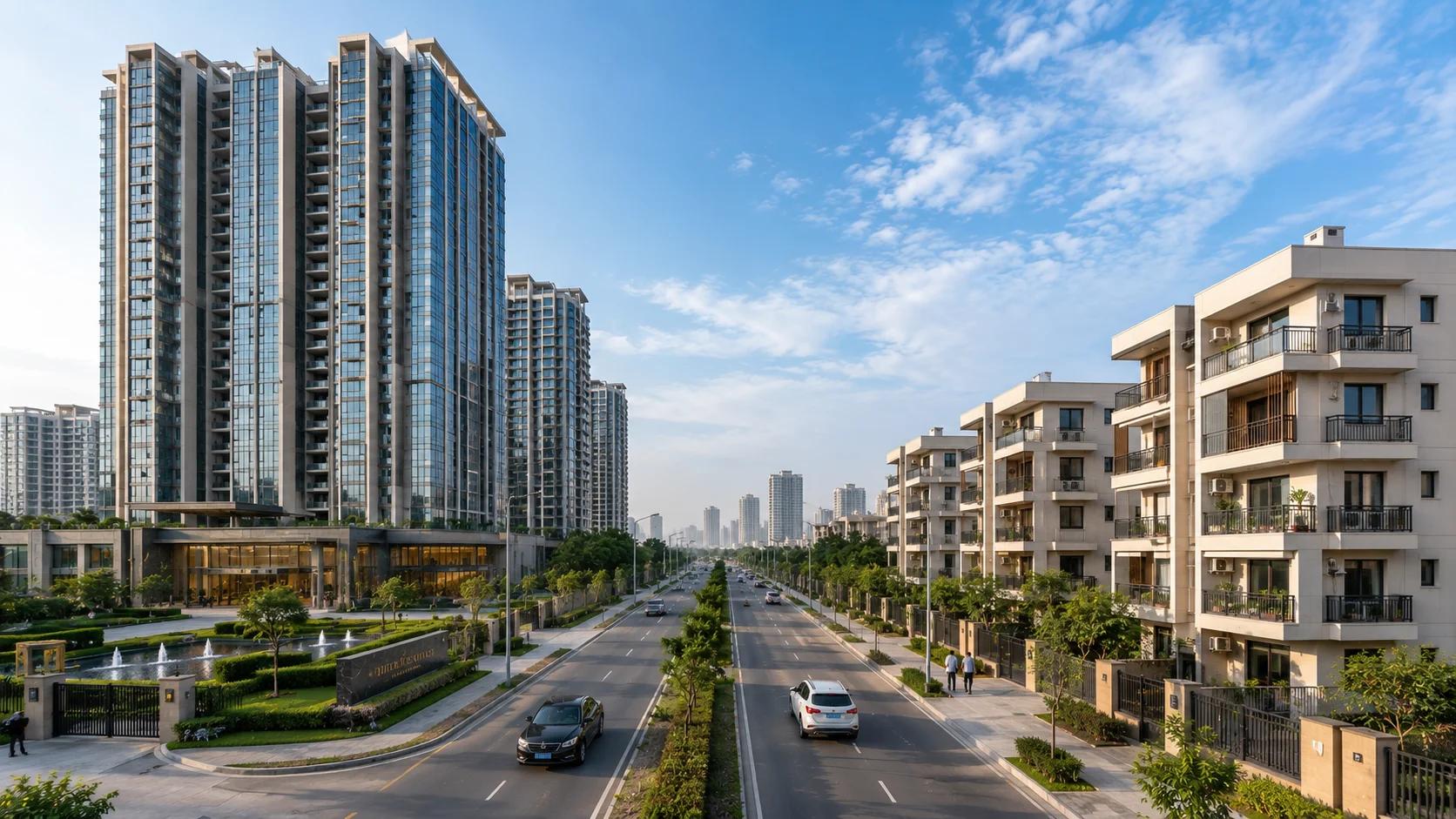
National developers, including DLF, Godrej, M3M, Sobha, Birla, Lodha, and Emaar, are winning the premium and branded segment in Gurgaon in 2026, driven by buyer preference for assured delivery and design quality. Local and regional builders continue to win on price per square foot value and carpet area efficiency, particularly in emerging sectors. The right choice depends on whether you are prioritising brand-backed resale liquidity or maximum usable space per rupee.
Why Are National Developers Suddenly Expanding Into Gurgaon?
Over the past few years, several prominent developers from outside NCR, including Lodha Group, Godrej Properties, Birla Estates, Oberoi Realty, Tata Realty & Infrastructure, Mahindra Lifespaces, RMZ, Sobha and others, have significantly expanded their presence in Gurugram. This influx underlines the city's position as the most lucrative and resilient real estate destination in the NCR region.
KT Jithendran, managing director and CEO of Birla Estates, said Gurugram continues to offer strong growth opportunities due to its high urbanisation rate and consumer readiness for premium housing. Birla Estates has already launched three of its four planned NCR projects, including Birla Pravaah in Sector 71, which recorded sales of over ₹1,800 crore within 24 hours of launch.
Lodha recently entered NCR through a ₹3,600 crore development partnership with Gurugram-based MRG Group. RMZ Real Estate Management also sees NCR, and Gurugram in particular, as structurally resilient.
A ₹1,800 crore sell-out in 24 hours is not a soft entry. National developers are not testing Gurgaon. They are committing significant capital because the demand signal is unambiguous.
What Is Driving Buyer Preference Toward Branded Developers?
Geetika Trehan, CEO (North Zone), Godrej Properties, noted that post-pandemic homebuyers increasingly prefer trusted, branded developers offering better design, assured delivery, wellness-focused planning, green spaces, and improved air-quality features.
Sushil Modi, executive director (finance) at Lodha Group, said the city stands out due to clearly defined residential micro-markets and long-term growth visibility.
This buyer shift is not driven by emotion. It follows directly from RERA's enforcement reality. National developers with proven delivery across multiple cities carry a track record that survives independent verification, which matters enormously when ₹3 to 10 crore is on the line.
National vs Local Developers: The Direct Comparison
| Factor | National Developers (DLF, Godrej, M3M, Sobha, Lodha, Birla) | Local / Regional Developers |
|---|---|---|
| Brand resale value | Higher, brand premium holds value | Lower, relies on local reputation |
| Price per sq ft | Higher | Lower, better value per rupee |
| Carpet area efficiency | Often lower due to common area design | Often significantly more usable space, one comparison showed 500 extra sq ft for the same budget |
| Delivery track record | Verifiable across multiple cities | Variable, project-specific |
| Design and amenities | Wellness-focused, premium clubhouse, larger pools | Functional, fewer large-scale amenities |
| Construction quality | Standardised across projects | Build quality varies, some excel (Sobha), others inconsistent |
| Best segment | Premium, luxury, branded residences | Mid-segment, value-conscious, emerging sectors |
| Typical entry price | ₹12,000 to ₹22,000 per sq ft for luxury high-rise | ₹9,000 to ₹15,000 per sq ft for comparable builder floors |
Where Do Local Developers Still Win?
In Gurgaon in 2026, builder floors in New Gurgaon sectors are priced at ₹9,000 to ₹15,000 per sq ft, while luxury high-rise apartments range from ₹12,000 to ₹22,000 per sq ft.
The high-rise apartment was 1,420 sq ft on paper. After accounting for lobby, corridors, and common areas, the actual usable carpet area was around 1,050 sq ft. The builder floor was listed at 1,557 sq ft, and almost all of it was usable space. Same budget. 500 extra square feet.
Value and space-focused buyers should target newer peripheral sectors or Sohna Road projects from local builders to maximise carpet area. Long-term appreciation buyers should prioritise projects by DLF, Godrej, Tata, or global developers in well-connected sectors even if carpet is smaller.
This is the genuine trade-off. National brands sell prestige and resale liquidity. Local builders sell raw space efficiency at a lower entry cost.
What Does "Branded" Actually Mean, and Does It Matter?
There is an important distinction even within the "national developer" category that most buyers miss.
True Branded (The Real Deal): Projects like M3M Elie Saab or Westin. There is a legal contract with a global IP holder. The brand audits the construction quality. This global recognition is what gives you resale liquidity in London or New York. Developer Luxury (The Local Heroes): Projects like Oberoi (Sector 58) or Trident (Sector 104). These are fantastic ultra-luxury projects. But they are Developer Brands; a local builder's name, no matter how good, relies entirely on local reputation.
This matters practically. A "branded residence" with a genuine global IP licensing agreement commands a different resale market than a developer simply using a premium-sounding project name. It matters because when you sell in 2030, a globally recognised tag holds value globally.
Which Developer Type Is Right for You?
| Your Priority | Best Choice | Why |
|---|---|---|
| Maximum usable space per rupee | Local or regional builder | 500+ extra sq ft possible at the same budget |
| Resale liquidity and brand trust | National developer | Brand premium holds value better against new supply pressure |
| First-time buyer, ₹70 lakh to 1 crore budget | Mix of both, peripheral sector local builders or compact units from national brands | Budget constraints favour value over pure brand |
| Premium or HNI buyer, ₹5 crore+ | National or truly branded developer | Global brand recognition supports international resale liquidity |
| Long-term wealth preservation | National developer in established sector | Branded projects hold value well against new competing supply |